
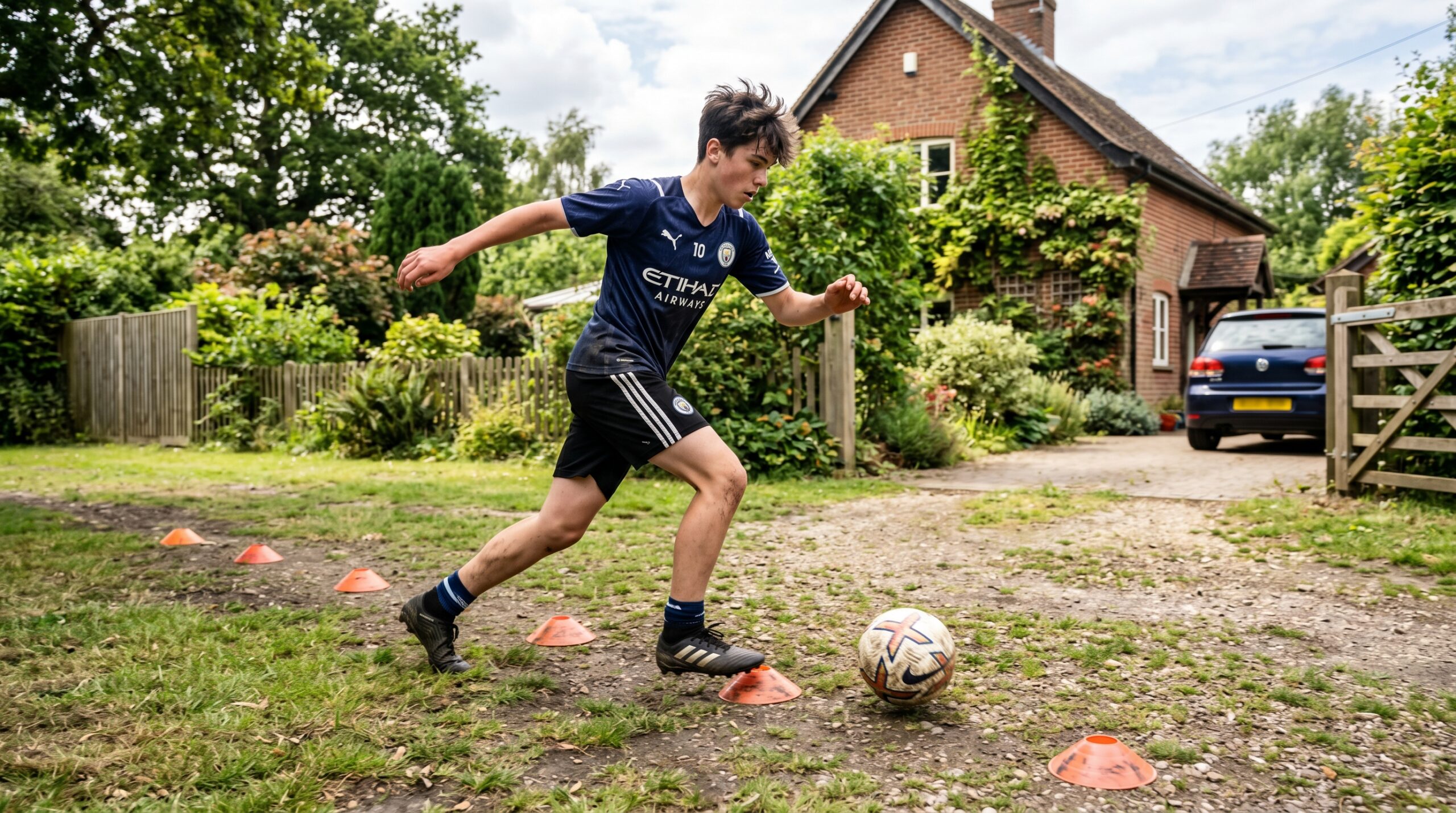
It is not necessary to have a whole team, a coach, and a playing field to learn more about football. Short individual practice can provide extra opportunities to work on ball skills alongside team training.
This home training program for youth players aged 12-18 years old includes information on the technical elements to be learned, the frequency of training, and a realistic session structure. No gym equipment or special devices are required at all.
After going through this program, you will be able to develop a home training schedule; understand which technical elements are most important; know how to measure progress; and avoid common training mistakes that hinder most young players.
Why Home Football Training Makes a Real Difference
Team sessions combine technical work, tactics and playing together. Home practice offers a chance to revisit a particular skill at your own pace. The useful amount of extra work depends on your age, school demands, team schedule and recovery. More practice is not automatically better when you are tired or sore.
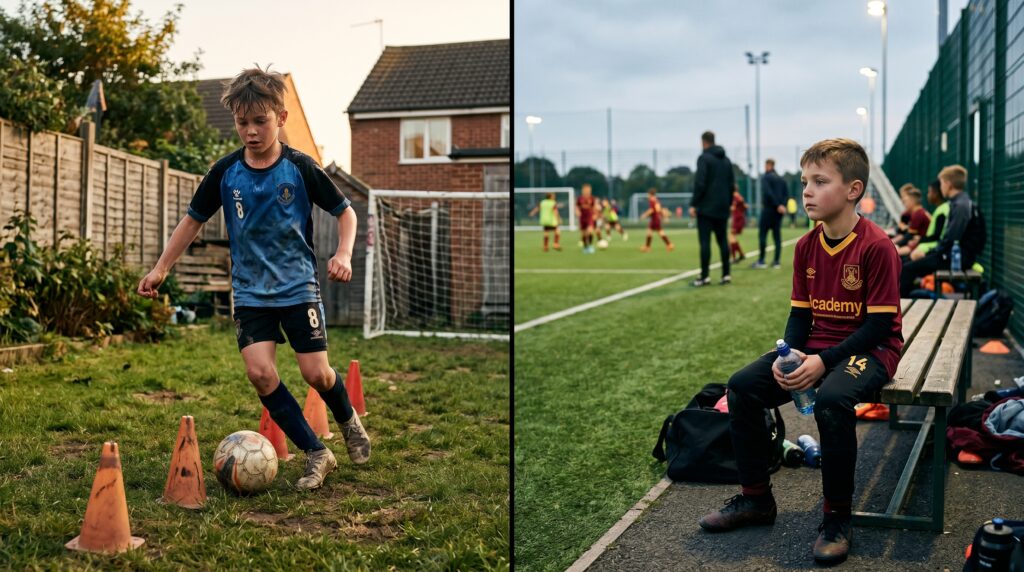
What You Actually Need to Train at Home
Keep the equipment list short. You do not need much to run effective football training at home.
- A football in the size used by your local age-group competition
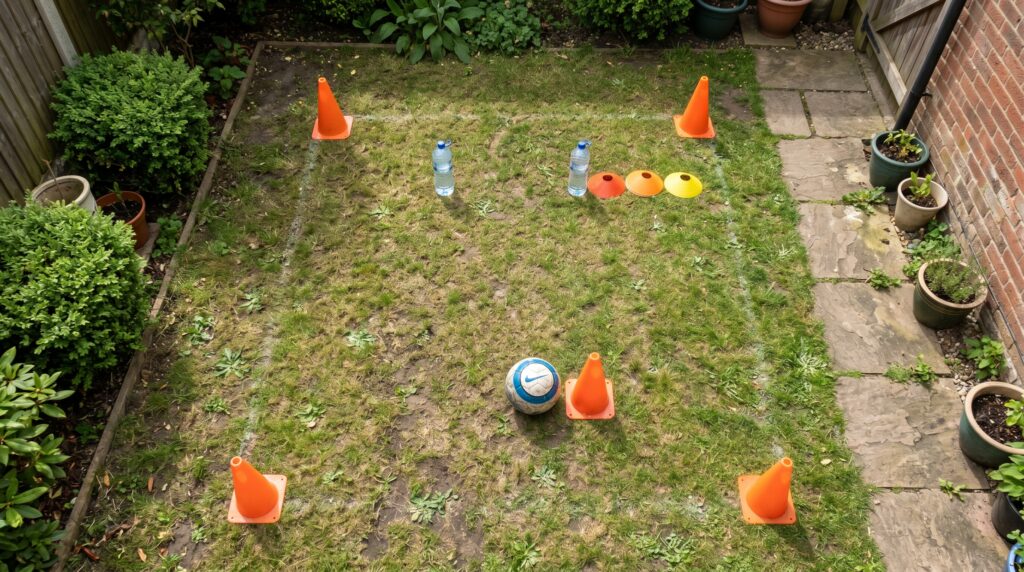
- A clear, level, traffic-free space appropriate to the drill; longer runs need a larger area and room to stop
- 4–6 flat, safe markers without sharp edges or a trip hazard
- A suitable wall for passing, with permission and away from windows or other people
- Comfortable footwear (football boots on grass, trainers on hard surfaces)
The Weekly Home Football Training Schedule
The example below includes two club sessions, one optional home technique session and a match. Adjust it with your coach or parent. Extra sessions should not crowd out sleep, school or recovery. The American Academy of Pediatrics recommends regular time off organised sport.
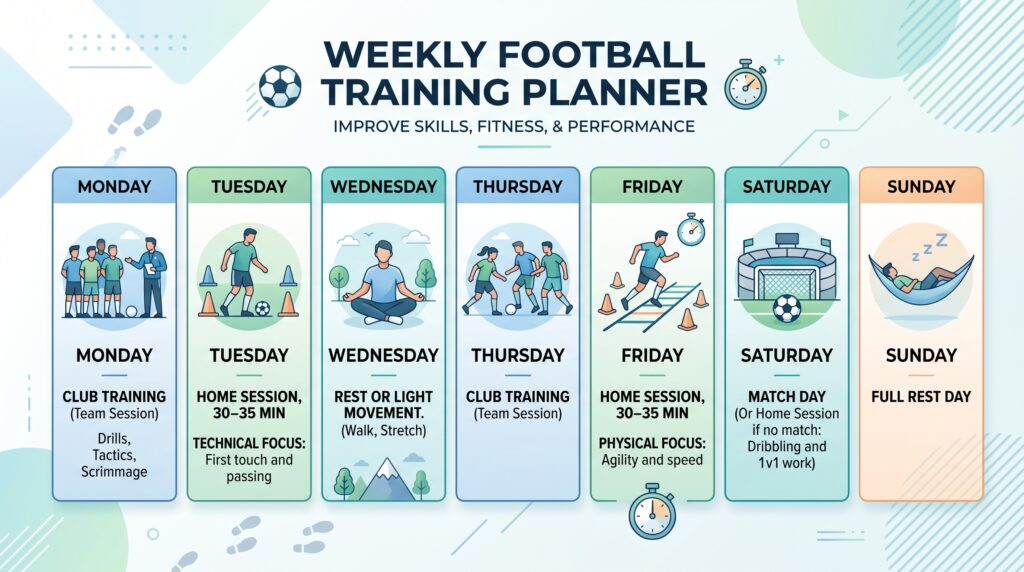
Sample Weekly Schedule
Monday: Club training (team session)
Tuesday: Optional short home session (first touch and passing), if recovered
Wednesday: Rest or light movement (walk, stretch)
Thursday: Club training (team session)
Friday: Rest or brief, easy ball work agreed with your coach; avoid adding hard speed work before a match
Saturday: Match day, or an optional home session if there is no match and you are recovered
Sunday: Full rest day
Home Football Training Sessions: What Each One Looks Like
Session 1: First Touch and Passing (Wall Work)
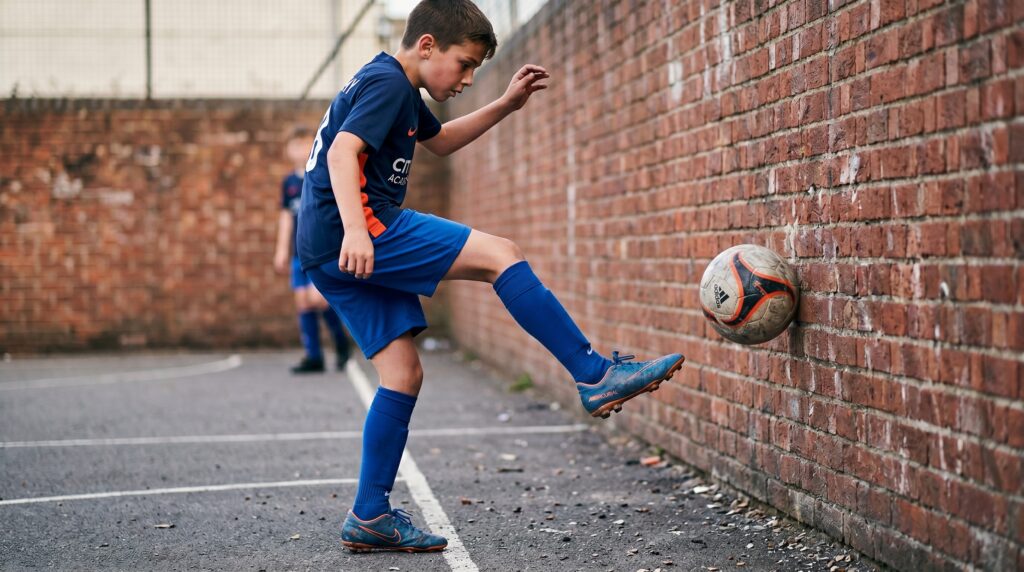
Example session: about 30–35 minutes including breaks; shorten it when appropriate.
- Warm-up (5 min): Jog on the spot, leg swings, ankle rotations, light toe-taps on the ball
- Wall passes with right foot only (7 min): 2-touch control, then pass, focus on cushioning the ball
- Wall passes with left foot only (7 min): Same drill; adapt the emphasis to your less confident foot
- Alternating feet (6 min): Right, left, right, left in sequence, keep the rhythm smooth
- First touch direction changes (5 min): Receive off the wall, take one touch to the side, pass back immediately
- Cool down (5 min): Static stretching, calves, quads, hip flexors
If you do not have a suitable wall, use a safely secured rebounder or practise gentle juggling and ball manipulation. Do not kick against a fragile fence.
Session 2: Agility, Speed, and Dribbling
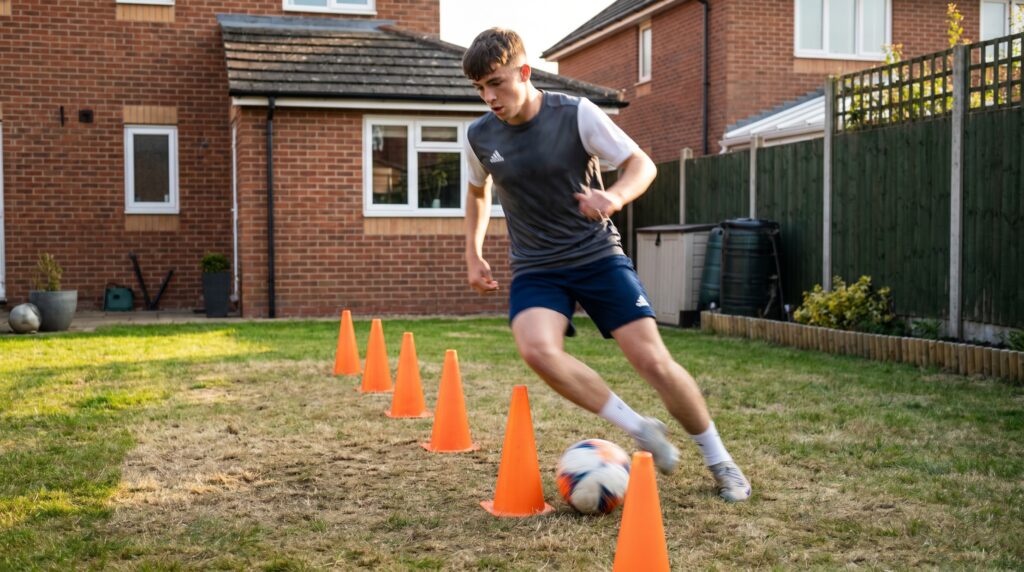
Example session: about 30–35 minutes including breaks; shorten it when appropriate.
- Warm-up (5 min): Dynamic stretches, high knees, lateral shuffles
- Cone dribbling circuit (8 min): Set 4–6 cones in a line, 1 metre apart. Weave through at a controlled speed, then walk back
- Speed burst drill (7 min): Only in a clear outdoor lane with safe run-out space, practise a few gradual accelerations over 10 metres with full recovery. Skip this drill in a small or hard-surfaced area
- 1v0 skill moves (8 min): Pick 2 moves (e.g. Cruyff turn, step-over). Practise each move approaching a cone in short sets, pausing when control deteriorates
- Cool down (5 min): Walk, breathing exercises, stretching
Technical Skills to Prioritise in Home Football Training
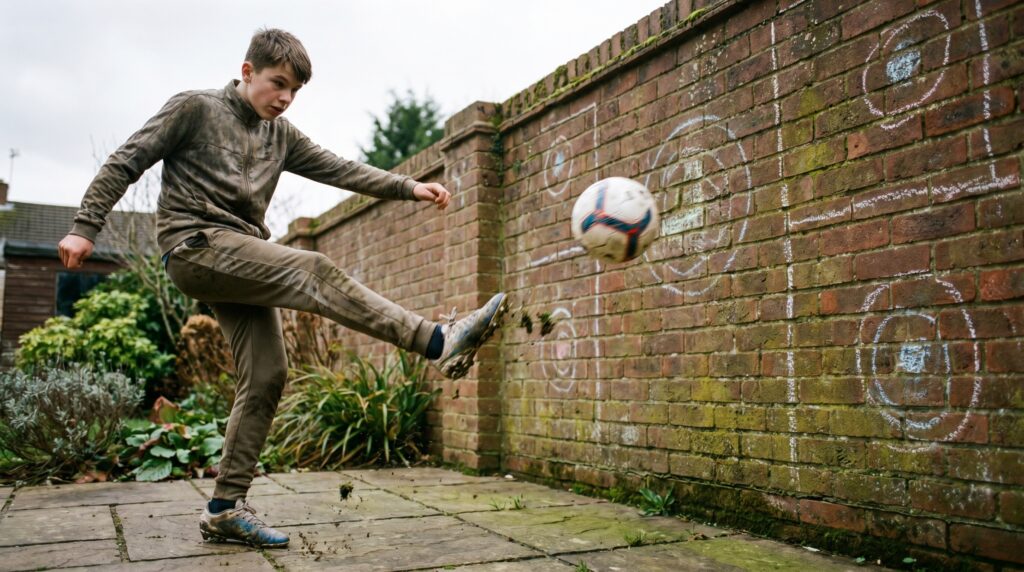
Not all skills need equal time spent on them during youth training. Focus on those skills that impact performance in every game.
- First touch is an essential skill in football. A good first touch gives you time and space, but a bad first touch takes away time and space.
- Weak foot passing: Many young players neglect their weak foot. Give it focused practice at a comfortable pace; improvement varies between players.
- Ball control close to your body while running at speed: Control the ball closely as you run fast.
- Change of direction: Ability to change direction quickly without losing the ball, useful for escaping pressure.
- Shooting technique: If you have enough space, practise striking the ball with your laces and with the instep from 10–15 metres.
How to Track Progress and Stay Motivated
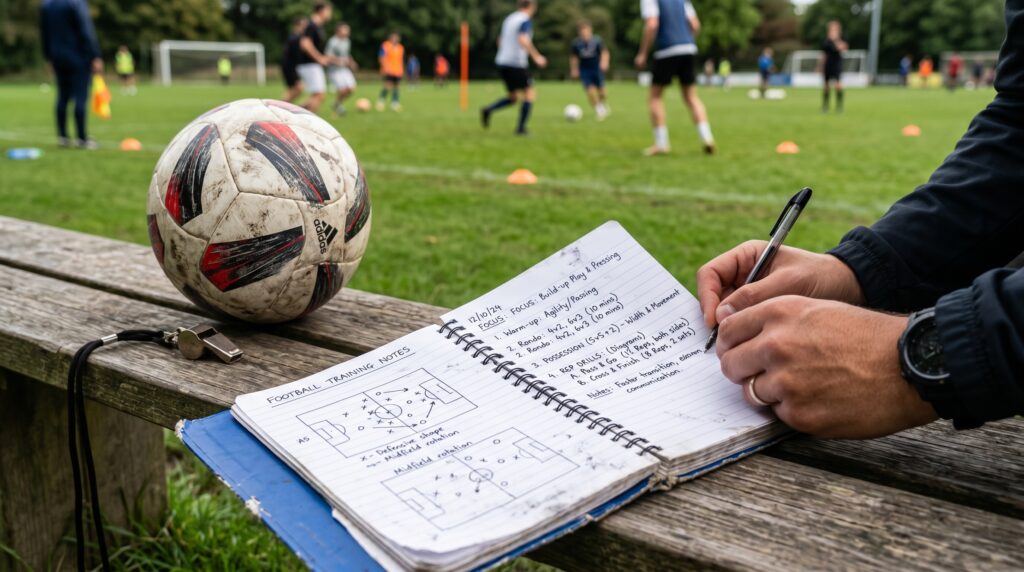
Not monitoring progress while training is an effective method of decreasing motivation. Proof that the effort made produces results is important.
You can use a notebook or a note-taking app on your smartphone. At the end of each workout session, write down the following three things: what was practised, how many repetitions were performed, and what part will be worked on next time. That’s enough.
Simple Progress Checks
- Wall passing: count controlled passes into a marked target over 20 attempts, using the same distance each time.
- Cone weave: record time and errors on the same course. Faster is only useful if control is retained.
- Juggling: compare your own comfortable sets over time rather than chasing a fixed monthly target.
- Match reflection: notice whether your first touch gives you more time and space.
The Mistakes That Slow Down Home Football Training
Only train your strong foot
For each exercise conducted using your right foot, do the same exercise using your left foot. Build accuracy before increasing pace.
Going through the motions
Twenty sloppy juggling attempts are worth less than five focused, controlled ones. Speed and volume mean nothing without quality intent.
Skipping rest days
Youth players aged 12–18 are still developing physically. Training every day without rest increases injury risk. The schedule above has built-in rest for a reason.
No clear focus per session
Free play has value too. For a focused session, choose one or two skills so you can judge what you practised.
Frequently Asked Questions
How many times a week should a teenage footballer train at home?
There is no universal number. Start with an optional short session if your team schedule and recovery allow, then review it with your coach. Do not assume that several extra sessions are safe for every player.
Can you get noticeably better at football by training at home?
Focused practice can help develop first touch, passing and close control. The rate of improvement varies, and applying a skill under match pressure also requires team play.
What football drills can I do at home with no equipment?
You can do ball juggling, toe-taps, sole rolls, wall passes, and most dribbling drills with just a football and a small space. Use safe flat markers if cones are unavailable. A wall replaces a training partner for passing and first touch work.
How long should a home football training session be for youth players?
Keep sessions short enough to maintain attention and technique. The examples can be shortened, and there is no universal 45-minute concentration cutoff. Stop or take a break when tired, distracted or uncomfortable.
Is home football training enough to replace club sessions?
Home training is used as a complementary, not a replacement, tool. Sessions in a club provide tactical guidance and a teamwork environment that are impossible to simulate at home while exercising. Utilise home training to develop your techniques, which will then be employed in the team game.
Start Your Home Football Training Plan This Week
Choose one manageable skill session that fits your existing schedule. Record what you practised and adjust it with your coach rather than adding volume automatically.
For more options, see our ball-control drills and passing accuracy drills. Keep the space safe, prioritise control and make time for recovery.
For complementary strength options, see the football core exercise guide. You can organise suitable skill priorities with the player development plan generator; review its suggested schedule with your coach and adjust it around existing team sessions and rest.
Track your sprint speed and acceleration progress without electronic gates using the free Football Sprint Speed Calculator.

6 comments on “Home Football Training Plan for Young Players”