
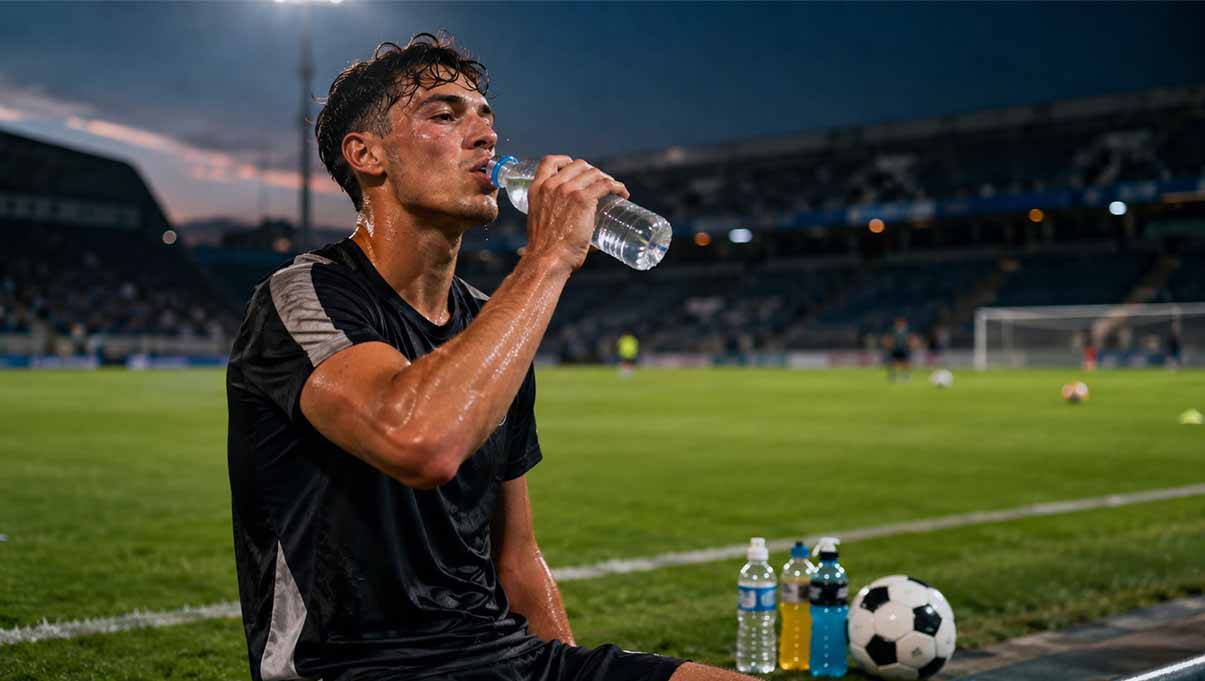
Not drinking enough water is one of the biggest reasons football players lose their performance on the field (this guide covers association football, also known as soccer). You can train as hard as you want, but if your body runs low on fluids, your speed and focus will drop quickly. According to research published in Comprehensive Physiology, losing just 2% of your body weight through sweat can lower your endurance by up to 25%. That’s exactly why these hydration tips for football players matter more than most athletes realize.
After years of playing football and testing different hydration routines on myself, I’ve noticed that most players don’t really have a proper plan for drinking water. They just grab whatever bottle is on the sideline and hope for the best.
From what I’ve seen, the players who follow a smart game day hydration plan feel fresher and recover much faster between sessions. They’re the ones still running strong in the 88th minute while others are slowing down. This guide gives you a clear, step-by-step plan for staying hydrated before, during, and after your matches — backed by real science.
Key Takeaways:
– Drink 5–7 mL of water per kg of body weight at least 4 hours before your match.
– Losing just 2% of your body weight through sweat can seriously lower your stamina.
– Electrolytes (like sodium and potassium) are a must for matches longer than 60 minutes.
– In hot weather, football players can sweat 1–2.5 liters per hour, so you need to drink more.
– Chocolate milk is one of the best recovery drinks after a match — backed by science.
Disclaimer: This article is for educational purposes only. It is not medical advice. Please talk to a doctor or a sports nutritionist before making big changes to your hydration or eating habits, especially if you have any health conditions.
Why Hydration Matters in Football

Quick Answer: Football players cover long distances during a match, which causes them to lose a lot of water and important minerals through sweat. Staying properly hydrated helps you think clearly, avoid cramps, and keep your energy up for the full 90 minutes.
How Much Your Body Works During a Match
Think about everything your body does during a 90-minute game. You’re sprinting, stopping, jumping, and pushing for the ball — again and again. According to the FIFA Technical Study Group, professional players run between 10 and 13 kilometers in a single match [2]. All that movement creates a lot of body heat, and your body cools itself down by sweating.
But here’s what many players don’t realize: sweat isn’t just water. It also contains important minerals like sodium, potassium, and magnesium. When you lose fluids without replacing them properly, your body has to work much harder to keep going. Your muscles tire out faster, and your energy drops.
How Dehydration Affects Your Brain
During a tournament in Spain, a really skilled midfielder started playing poorly in the second half. He wasn’t tired from running his focus just disappeared. He kept passing the ball to the wrong player. That’s because dehydration in football doesn’t just affect your body it also affects your brain. When your brain doesn’t have enough fluid, your thinking slows down. In a fast-paced sport like football, even a small delay in your decision-making can make a big difference.
How Much Water Do Football Players Need?

Quick Answer: The American College of Sports Medicine (ACSM) suggests drinking 5–7 mL of water per kilogram of body weight at least 4 hours before playing. Most football players need about 3 to 4 liters of water per day, and more on match days.
Finding Your Daily Baseline
There isn’t one magic number that works for every player. A bigger player will need more water than a smaller one. Playing in hot weather also means you’ll lose more fluids. But a good starting point for most active football players is about 3 to 4 liters (roughly 100 to 135 ounces) of water per day. On match days or during heavy training, you’ll need even more.
What the ACSM Recommends
The American College of Sports Medicine gives one of the most trusted guidelines. They recommend drinking 5–7 mL per kilogram of your body weight about 4 hours before you play. For example, if you weigh 75 kg (about 165 lbs), that means drinking around 375 to 525 mL (about 12 to 18 ounces) of water or a sports drink before the game.
The Simple Urine Color Check
One of the easiest ways to check if you’re drinking enough water is to look at the color of your urine. If it’s a light, pale yellow like lemonade you’re in good shape. If it’s a dark yellow or amber color, that means your body needs more water right away. Many professional teams actually use this method during preseason to keep their players on track.
The Game-Day Hydration Timeline
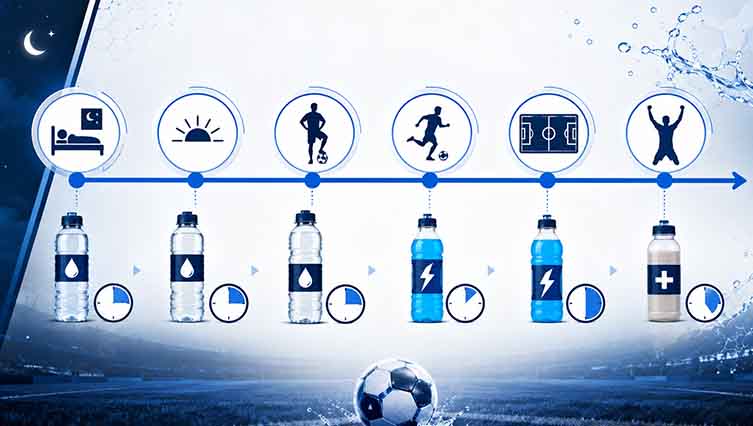
Quick Answer: A good game-day hydration plan starts 24 hours before the match. Drink water steadily the night before, have 500 mL when you wake up, sip 300 to 500 mL about two hours before the game, and take small sips of an electrolyte drink at halftime.
This timeline is based on sports science research and tested over many personal game days. Don’t leave your water intake to luck follow a schedule.
The Night Before (24 Hours Out)
Your hydration for a Saturday game actually starts on Friday.
- What to do: Drink 2 to 3 liters of water throughout the day.
- At dinner: Have two big glasses of water with your meal. Adding a little extra salt to your food can help your body hold onto the water better.
- What to skip: Avoid sugary sodas and caffeine late at night. These can make you lose more water and affect your sleep.
The Morning of the Match (4 Hours Out)
Your body loses water while you sleep just from breathing. So you wake up slightly low on fluids every morning.
- What to do: Drink about 500 mL (around 16 ounces) of water as soon as you wake up.
- At breakfast: Have another 250–300 mL of water or a mix of water and fruit juice with your meal.
Two Hours Before the Match
This is your last chance to fill up without feeling uncomfortable on the field.
- What to do: Drink 300 to 500 mL of water mixed with electrolytes.
- Why: The sodium in the electrolyte drink helps your body hold onto the water instead of just sending it straight to the bathroom.
15 Minutes Before Kickoff
- What to do: Take a few small sips — about 100 to 150 mL — of water or a sports drink. Don’t drink too much at once.
Halftime: Your Best Chance to Rehydrate
You only have about 15 minutes, so make them count.
- What to do: Drink 250 to 500 mL of an electrolyte sports drink.
- Tip: If it’s a hot day, keep the drink cool (not ice-cold) to help bring your body temperature down comfortably.
Electrolytes for Football Players
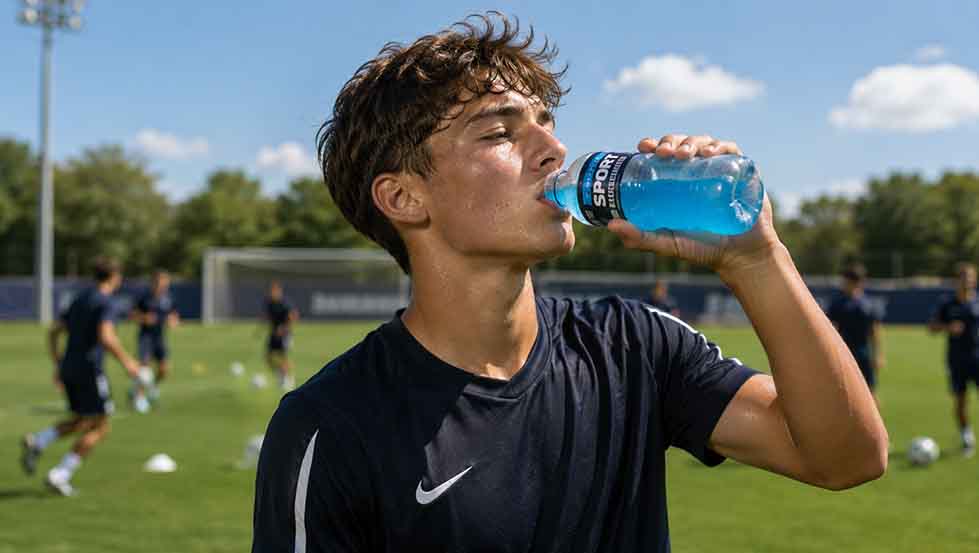
Quick Answer: Electrolytes like sodium, potassium, and magnesium help your muscles work properly and keep your body’s fluid levels balanced. Replacing them is essential for football players because sweat takes these minerals out of your body, which can lead to cramps and tiredness.
Why Water Alone Isn’t Always Enough
A lot of players drink plenty of water but still get cramps or feel exhausted near the end of a match. That’s because water replaces the fluid, but it doesn’t replace the minerals your body loses through sweat.
Every time you sweat, you lose sodium, potassium, calcium, and magnesium. These minerals help your muscles move properly and keep your energy levels up. Sodium is especially important it helps your body hold onto water. If you drink too much plain water without replacing sodium, it can actually throw off your body’s balance. This condition is called hyponatremia, and it has been linked to health issues in endurance sports.
How to Add Electrolytes to Your Routine
For any training or match that lasts more than 60 minutes, plain water alone won’t be enough. You should add a sports drink or drop an electrolyte tablet into your water bottle.
- Sodium: Helps your body hold onto water. Look for drinks with 200–300 mg per serving.
- Potassium: Helps prevent cramps and keeps your muscles working smoothly.
- Magnesium: Helps with energy and muscle recovery.
Research shows that players who follow a structured electrolyte routine experience far fewer cramps in the final 20 minutes of matches. It really does make a difference.
Hydration in Different Weather Conditions
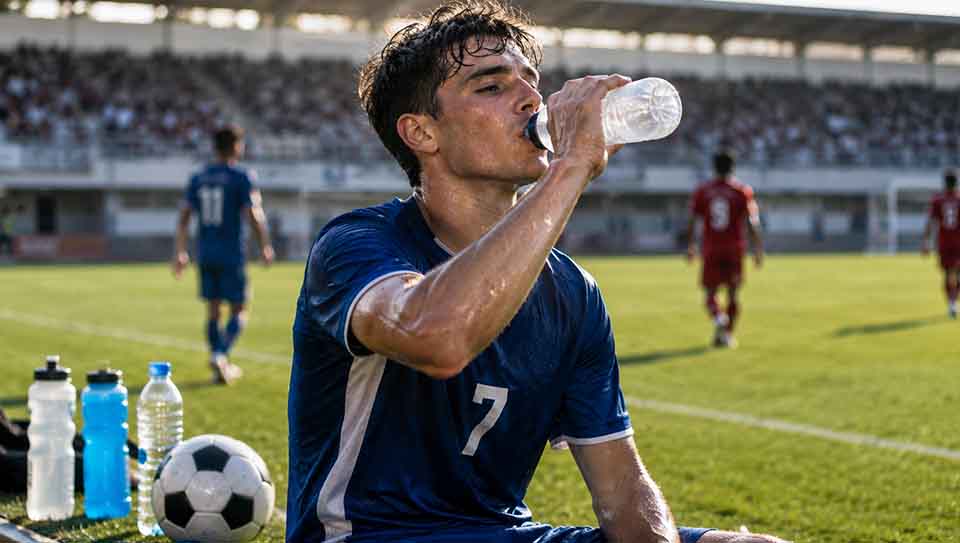
Quick Answer: Your hydration plan should change depending on the weather. Hot weather makes you sweat more, humid weather makes it harder for sweat to cool you down, and cold weather hides the signs of dehydration because you don’t feel as thirsty.
Playing in the Heat
When it’s hot outside, everything changes. Football players can sweat between 1 and 2.5 liters per hour in high temperatures. If you’re sweating that much but only drinking a little, your body will run low on fluids very quickly. On hot days, increase the amount of water and electrolytes you drink, and take advantage of every water break during the match.
Playing in Humid Weather
Humidity can be even trickier than dry heat. When the air is full of moisture, your sweat can’t evaporate properly. Since evaporation is what cools your skin down, your body just keeps sweating without getting cooler. On humid days, try having a cold (not frozen) drink before the match and at halftime to help cool your body from the inside.
Playing in Cold Weather
Many players forget to drink water when it’s cold because they don’t feel hot or thirsty. But cold air is very dry, and you lose a lot of water just by breathing. On top of that, cold temperatures make you feel less thirsty even when your body actually needs fluids. In winter, stick to a set drinking schedule instead of waiting until you feel thirsty.
Post-Match Recovery Hydration
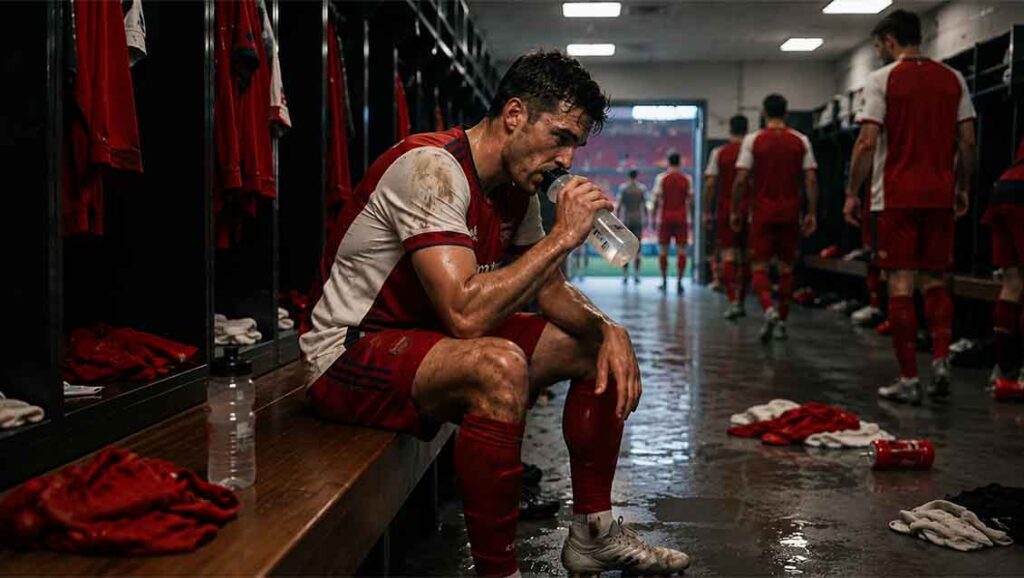
Quick Answer: After a match, you should aim to drink about 150% of the fluid you lost during the game. A drink that combines fluids with carbohydrates and protein like chocolate milk helps your body recover faster.
The 150% Rule
The match is over and you’re tired. But what you drink in the next two hours matters a lot for how you’ll feel at your next training session.
The basic rule is to drink 150% of whatever you lost. Why more than 100%? Because your body continues to lose fluid even after the match — through sweat and using the bathroom. So if you lost about 1 kg (2.2 lbs) during the game, try to drink about 1.5 liters of fluid over the next few hours.
Why Chocolate Milk Works So Well
You don’t always need fancy or expensive recovery shakes. A 2019 study published in the Journal of the International Society of Sports Nutrition found that chocolate milk works just as well as and sometimes even better than commercial recovery drinks for athletes [6]. It has a great mix of carbohydrates and protein in a 3:1 ratio, plus natural fluids, sodium, and calcium.
Many professional teams now keep chocolate milk in the locker room as a go-to recovery drink. It’s affordable, it tastes good, and it actually works.
Common Hydration Mistakes
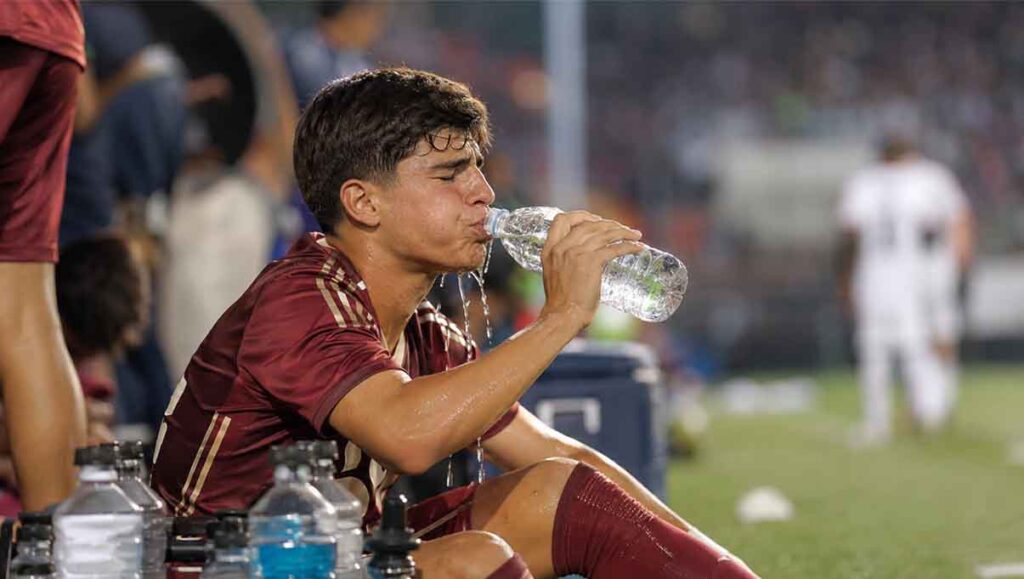
Quick Answer: The most common mistakes football players make include drinking too much water at once, skipping electrolytes, relying on energy drinks, and only drinking when they feel thirsty.
Everyone makes mistakes, but in football, small hydration errors can affect your performance. Here are the most common ones to avoid.
Drinking Too Much at Once
What happens: A player comes off the field, grabs a bottle, and drinks the whole thing in a few seconds.
The problem: Your stomach can only process a limited amount of fluid at a time. Drinking too much too fast can cause bloating and stomach discomfort. It’s much better to sip water throughout the day and during breaks.
Choosing Energy Drinks Over Water
Energy drinks with a lot of sugar and caffeine might seem like a good idea before a game. But the quick energy boost is usually followed by a drop in energy about an hour later. Large amounts of caffeine can also upset your stomach. If you want a little caffeine, a small cup of coffee about an hour before the game is a better choice.
Waiting Until You’re Thirsty
If you’re already feeling thirsty on the field, it means your body is already low on fluids. Thirst is a delayed signal it shows up after dehydration has already started. A good hydration plan means drinking on a schedule, not just when your body tells you to.
Beginner vs Advanced Strategies
Quick Answer: If you’re just starting, focus on drinking water regularly and checking your urine color. If you’re playing at a higher level, learn to calculate your sweat rate and build a custom electrolyte plan.
For Beginners and Youth Players
If you’re new to competitive football, keep things simple. Carry a water bottle with you wherever you go to school, to practice, everywhere. Make it a habit to take sips throughout the day. For your actual matches, add a basic sports drink to your routine. Just getting the basics right will already make you perform better than most players around you.
For Experienced Players: How to Calculate Your Sweat Rate
If you’re playing at a more competitive level, guessing how much water you need isn’t good enough. You should calculate your personal sweat rate. Here’s a simple way to do it:
- Step 1: Weigh yourself right before a 60-minute training session.
- Step 2: Complete the session and keep track of how much you drink during it.
- Step 3: Weigh yourself again right after the session (towel off your sweat first).
- Step 4: Subtract your post-training weight from your pre-training weight. Convert the weight lost to ounces (1 lb = 16 oz). Then add the amount of fluid you drank during the session.
Example: If you lost 1 pound (16 oz) and drank 8 oz during training, your total sweat loss was 24 oz per hour. That means you should drink about 24 oz of fluid per hour during intense exercise in similar weather conditions.
Recommended Drinks Comparison Table
Quick Answer: The best drink for you depends on when you’re drinking it. Water is perfect for daily hydration. Sports drinks work best during matches. And protein-carb drinks like chocolate milk are ideal right after the game.
Here’s a simple comparison of the most popular options (per standard 8 oz / 240 mL serving):
| Drink | When to Use | Sodium (mg) | Potassium (mg) | Sugar (g) | Best For |
| Water | All day, every day | 0 | 0 | 0 | Daily hydration and light training |
| Isotonic Sports Drink | Before the match & at halftime | 110–160 | 30–45 | 14–21 | Quick fluid and energy during intense games |
| Coconut Water | After the match / light training | 40–60 | 400–470 | 9–15 | Natural potassium boost; not ideal for mid-game use |
| Chocolate Milk | Right after the match | 150–160 | 400–430 | 20–25 | Full recovery: fluids + carbs + protein in a 3:1 ratio |
| Electrolyte Tablet (in water) | Before the match & during training | 250–320 | 50–100 | <1 | Great for players who sweat a lot but want less sugar |
FAQ
How much water should a football player drink per day?
Football players should drink about 3 to 4 liters (100–135 ounces) of water daily. On training or match days, you’ll need more. Check your urine color — pale yellow means you’re well hydrated.
When should a football player start hydrating for a match?
Start hydrating 24 hours before the game. Drink 2–3 liters the day before, 500 mL when you wake up on match day, and 300–500 mL of an electrolyte drink about two hours before kickoff.
Are sports drinks better than water for football players?
Sports drinks are more helpful than water only during hard exercise lasting over 60 minutes. They provide sodium and carbohydrates that plain water doesn’t. For everyday hydration, plain water is the best choice.
What are the signs of dehydration in football?
Early signs include slower running speed, poor focus, and legs that feel heavy. Other signs are dry mouth, headaches, dark-colored urine, and muscle cramps. Don’t rely on thirst — by the time you feel thirsty, you’re already low on fluids.
Is coconut water good for football hydration?
Coconut water is great for light training and recovery because it has a lot of potassium. However, it has less sodium than sports drinks, so it may not be the best choice during an intense, sweaty match.
How does weather affect a football player’s hydration needs?
Hot weather increases sweating, so you need to drink more water and electrolytes. Humid weather makes it harder for your body to cool down. Cold weather hides the signs of dehydration because you don’t feel as thirsty, even though your body is still losing fluids.
Can a football player drink too much water?
Yes, it’s possible. Drinking very large amounts of plain water without any electrolytes can lower the sodium levels in your body. This condition is called hyponatremia, and it can cause bloating and confusion. The solution is to spread your water intake throughout the day and add electrolytes during hard training or matches.
Conclusion
Hydration for football players isn’t about expensive supplements; it is about discipline. The most talented winger in the league becomes painfully average when they are 3% dehydrated.
You now have the framework. You know the science behind electrolytes, you know how to calculate your sweat rate, and you have a minute-by-minute timeline for game day. The next step is execution.
Don’t wait for your next match to try this out. Start tomorrow. Weigh yourself before and after your next training session to determine your sweat rate, and build your customized hydration strategy from there. Your performance in the 89th minute will thank you.
