
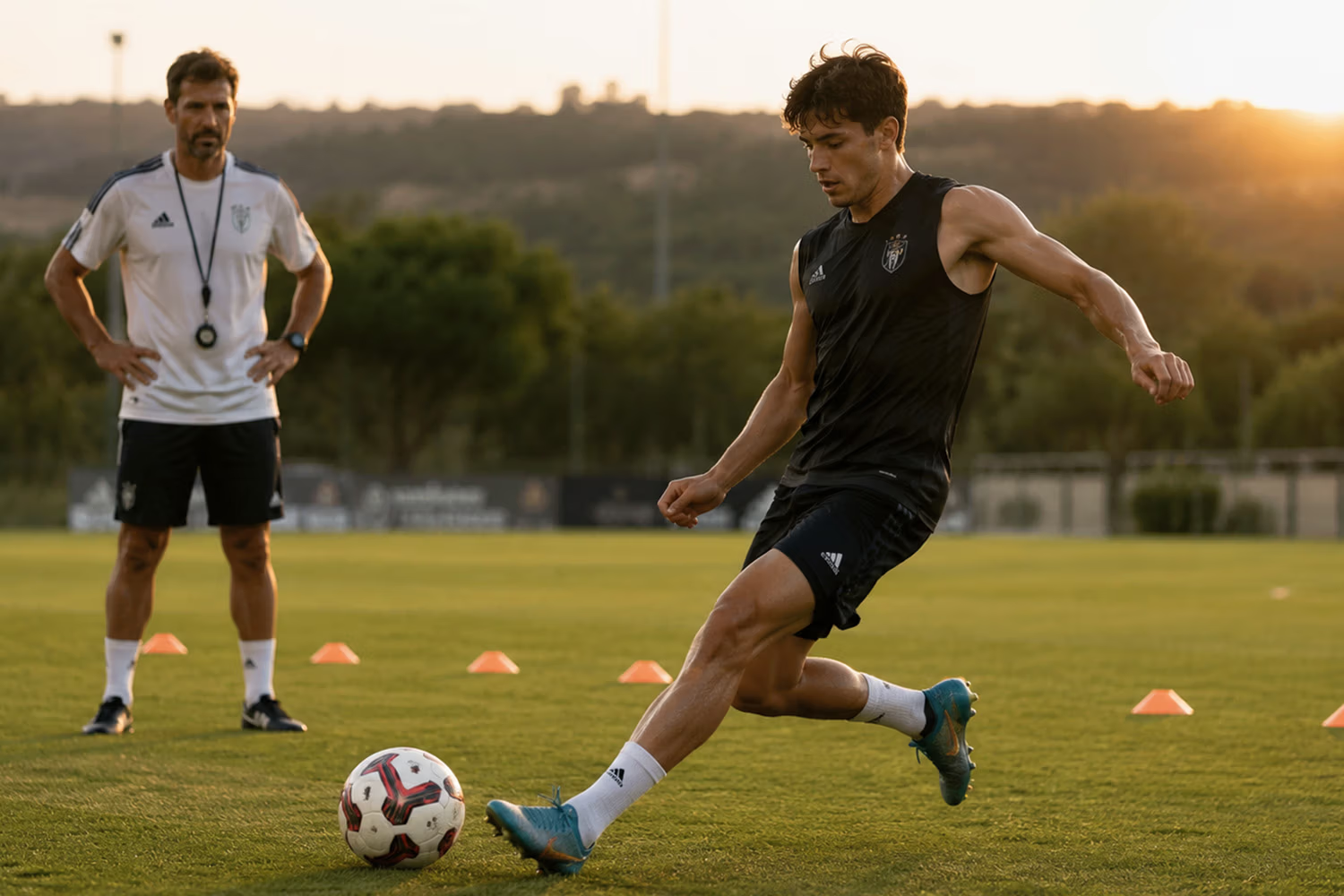
Watch any Sunday league match, and you’ll spot the same problem inside the first ten minutes: a player receives the ball with time to spare, then rushes a pass three yards wide of a teammate who was standing still. That miss rarely comes down to a weak foot. It comes down to a lack of repetition against a real target, which is exactly what structured football passing drills are built to fix.
This guide sets out five drills that coaches actually use, from a solo wall routine you can run in a driveway to a four-player square that forces one-touch decisions under time pressure. Each of these passing accuracy drills lists sets, reps, rest, and the specific mistake that most often shows up, so you know what to watch for the next time you train.
| Disclaimer
The exercises and training advice in this article are for general information purposes only. Always warm up properly before training. If you have any existing injuries or medical conditions, consult a qualified physiotherapist or sports doctor before starting any new training programme. VanoraHub is not responsible for any injuries sustained while following this guide. |
| Quick Answer
The quickest way to raise passing accuracy is to train against a fixed target, such as a wall or a cone gate, while limiting yourself to one or two touches per repetition. Five drills cover the full range a player needs: wall passing, cone gate passing, triangle passing, one-touch square passing, and long diagonal passing, trained two to three times a week. |
Passing Accuracy in Modern Football
Possession football lives or dies on the pass completion rate of players who never touch the ball inside the penalty area. Football passing accuracy separates the players a coach can trust in tight spaces from the ones who get substituted the moment the game tightens up. A center back who finds a midfielder under pressure keeps the move alive; a center back who mishits that same pass hands the opposition a free counter-attack.
That trust gets built through repetition, not talent alone. A player with average technique who drills the same short pass hundreds of times develops a more reliable habit than a naturally gifted player who never trains it in isolation. Passing accuracy also compounds. A team that strings together ten clean passes forces the opposition to work harder defensively than a team that gives the ball away after two touches, even when both sides create the same number of chances.
Equipment Needed
- A football (any size, but match ball size where possible)
- 8 to 10 cones or markers
- A flat wall or rebounder board (useful for solo sessions, not required)
- A stopwatch or phone timer
- A training partner or small group for the team drills
- Open space of roughly 20 by 20 yards
The Drills: Best Passing Drills for Football Accuracy
Drill 1: Wall Pass Drill
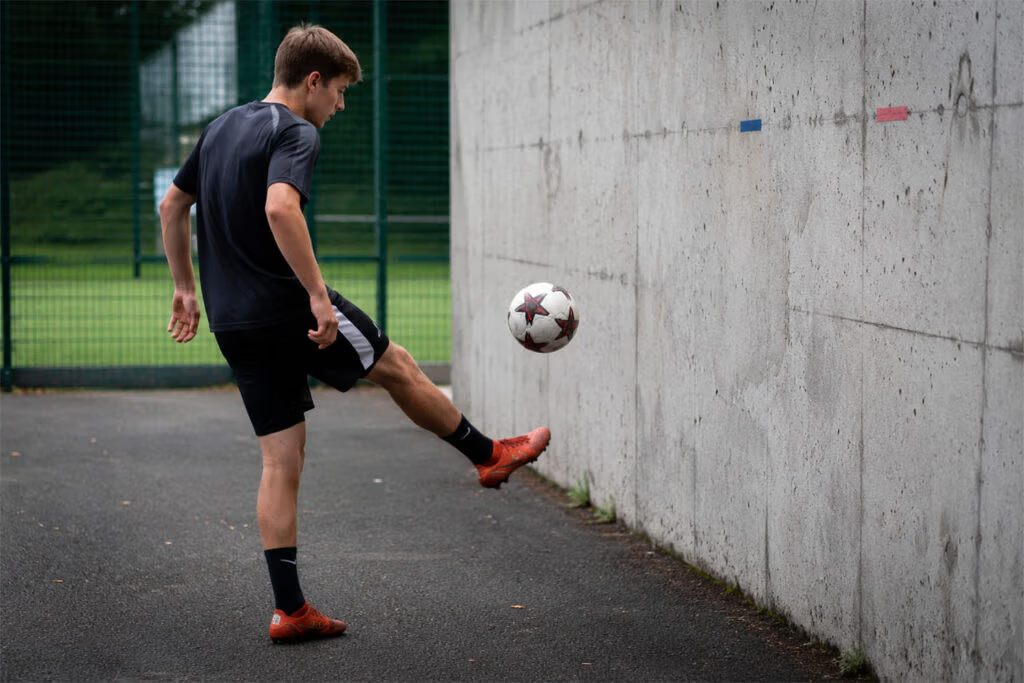
A solo drill built for first touch and passing weight through pure repetition. All it needs is a ball and a flat wall, which makes it the easiest entry point for beginners training alone.
| Sets | Reps/Duration | Rest | Equipment | Difficulty | Football Benefit |
| 4 | 20 passes | 60 seconds | Ball, wall | Beginner | Builds first touch and passing weight under repetition |
How to do it:
- Stand 6 to 8 yards from a flat wall.
- Pass the ball firmly into the wall using the inside of your foot.
- Control the rebound with one touch, keeping the ball close.
- Pass again immediately, alternating feet every 5 passes.
- Repeat for the full set, keeping the ball below knee height.
Common mistake: Letting the rebound bounce too far away before controlling it, which kills the rhythm the drill depends on.
Coaching tip: Aim for a specific brick or mark on the wall every time. A fixed target turns a random kick into a genuine accuracy drill, and it’s the same principle goalkeepers use when they aim at a specific corner during shot-stopping practice.
Drill 2: Cone Gate Passing
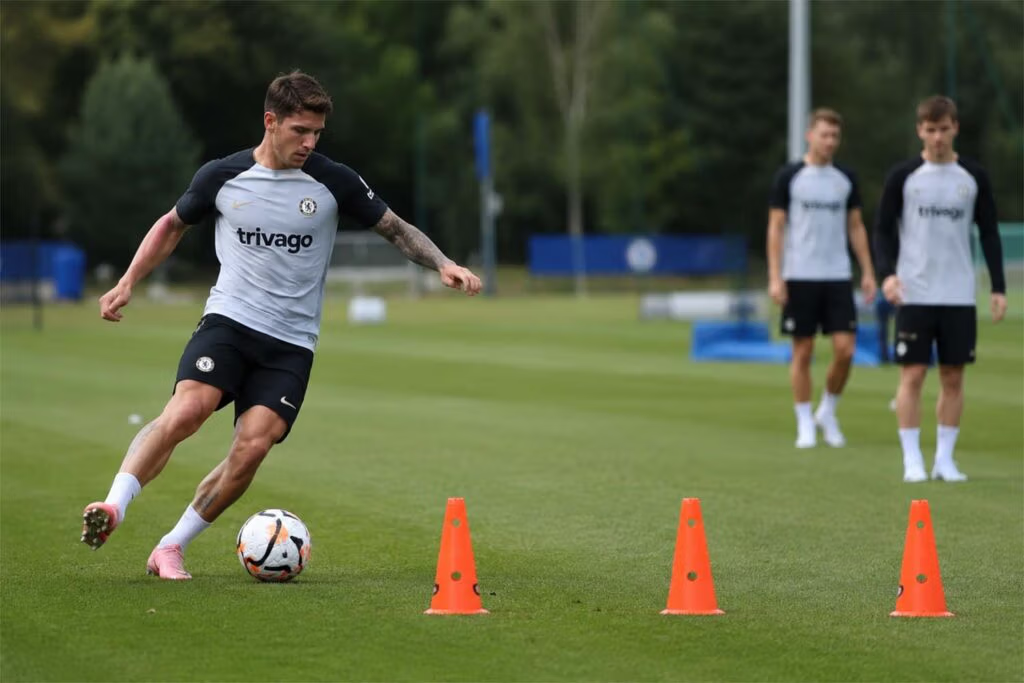
This drill trains directional accuracy by forcing the ball through a narrow gate instead of a general area, which is closer to threading a pass between two defenders than open-field passing ever is.
| Sets | Reps/Duration | Rest | Equipment | Difficulty | Football Benefit |
| 3 | 15 passes per gate | 45 seconds | 6 cones, ball, partner | Beginner to Intermediate | Trains directional accuracy and pass weight over distance |
How to do it:
- Set up three gates, each made from two cones placed 2 yards apart, spread 10 yards in front of you.
- Stand 12 to 15 yards back with a partner or rebound wall.
- Pass the ball through a chosen gate, calling out which gate before you strike the ball.
- Have your partner return the ball, or collect the rebound yourself.
- Rotate through all three gates evenly across the set.
Common mistake: Looking down at the ball instead of the gate, which throws off direction more than poor technique ever does.
Coaching tip: Pick your target gate before the ball arrives, not while you’re striking it. Scouts watching youth trials often care more about a player’s head position before the pass than the strike itself, since it signals whether the decision was made in advance.
Drill 3: Triangle Passing Drill
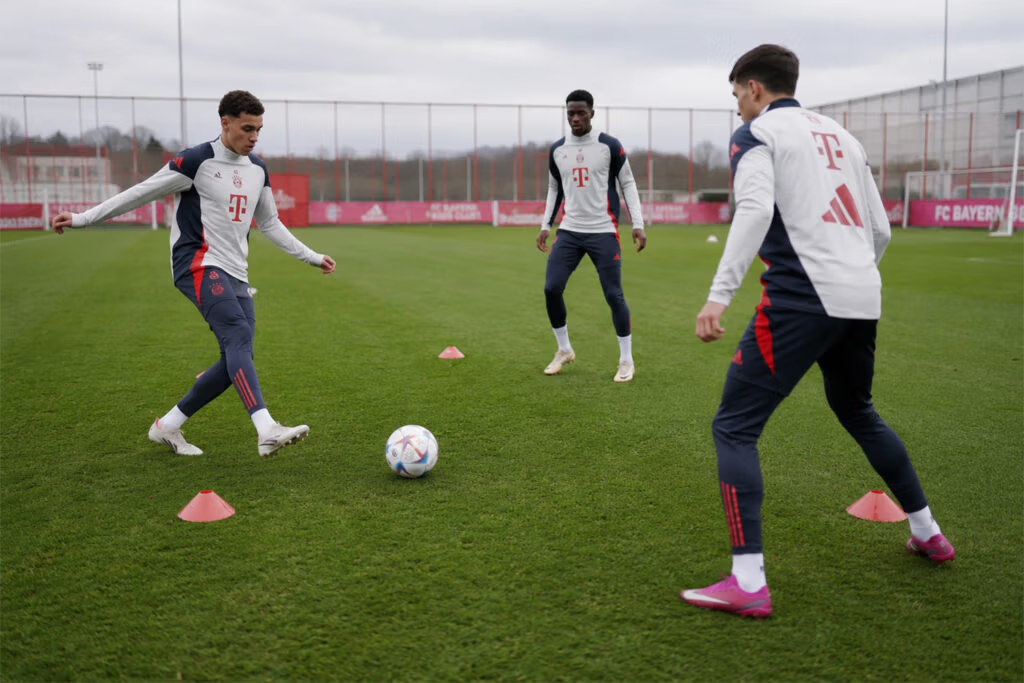
This drill layers movement onto the pass itself, which separates it from static drills and gets closer to how passing actually works inside a match.
| Sets | Reps/Duration | Rest | Equipment | Difficulty | Football Benefit |
| 4 | 3 minutes | 60 seconds | 3 cones, 2 to 3 players | Intermediate | Combines movement, one-touch passing, and body shape under light pressure |
How to do it:
- Set up three cones in a triangle, 8 to 10 yards apart, with one player at each cone.
- Pass the ball around the triangle in one direction using one or two touches.
- After passing, move to the next cone in the rotation rather than staying still.
- Switch direction every minute to work both feet and both passing angles.
- Increase pace as the group’s touch quality improves.
Common mistake: Standing still after the pass instead of supporting the next player, a habit that gets punished immediately in a real match once a defender closes the passing lane.
Coaching tip: Call “man on” at random points during the drill to force a quicker release. It’s closer to the pressure of an actual game than a silent, unpressured pattern, and it’s a method used widely in academy rondos.
Drill 4: One-Touch Passing Square
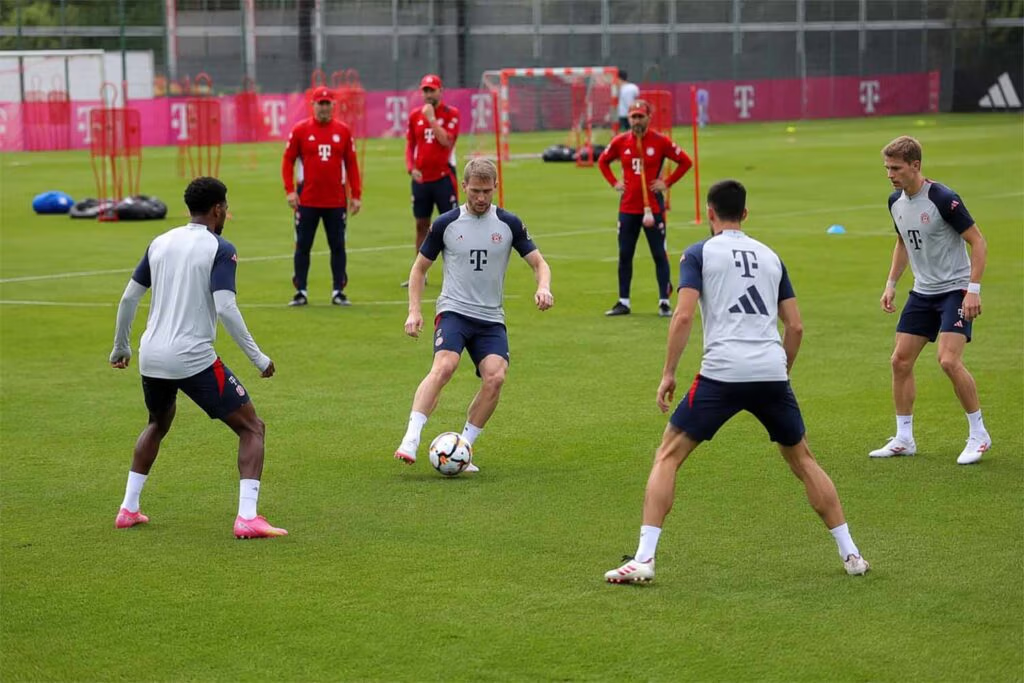
This is the drill that separates players who can pass from players who can pass under time pressure, since it removes the extra touch most players default to when nobody’s closing them down.
| Sets | Reps/Duration | Rest | Equipment | Difficulty | Football Benefit |
| 3 | 4 minutes | 90 seconds | 4 cones, 4 players | Intermediate to Advanced | Sharpens one-touch decision making and passing accuracy under time pressure |
How to do it:
- Set up four cones in a square, roughly 10 yards apart, with one player at each corner.
- Pass the ball around the square using only one touch per player.
- Vary the passing pattern: straight across, diagonal, or skip a player.
- Keep the ball moving continuously without stopping to reset.
- If control breaks down, restart quickly rather than pausing the whole group.
Common mistake: Taking an extra touch out of habit, which defeats the point of the drill and slows the group’s tempo.
Coaching tip: Set a target number of consecutive one-touch passes before a mistake breaks the run. Chasing that number keeps focus sharp for the whole session, and it mirrors how coaches track rondo streaks on professional training grounds.
Drill 5: Long Diagonal Passing Drill
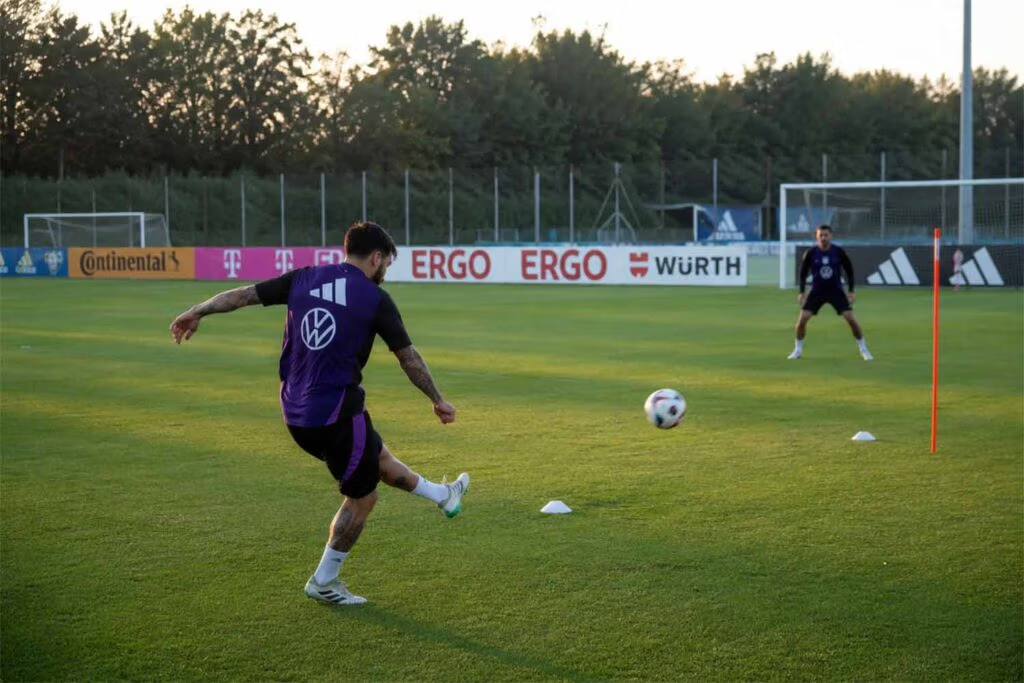
This drill covers the range short-passing drills leave out entirely: the switch of play that shifts defenders and opens the far side of the pitch.
| Sets | Reps/Duration | Rest | Equipment | Difficulty | Football Benefit |
| 3 | 10 passes each side | 90 seconds | Ball, 2 target cones, partner | Advanced | Builds accuracy on longer, match-realistic switches of play |
How to do it:
- Place two cones 30 to 35 yards apart, one at each end of your space.
- Stand at one cone with a partner or target zone at the other.
- Strike a driven or lofted diagonal pass toward the target cone, aiming to land it within 2 yards.
- Control the return pass, reset, and repeat.
- Switch striking foot after every set of 10.
Common mistake: Opening the body too early, which sends the pass wide of the target far more often than a poor strike does.
Coaching tip: Keep your standing foot pointed at the target, not at the ball. Watch any accurate long passer at professional level and their plant foot tells you exactly where the ball is going before contact.
Sample Weekly Training Plan
A simple three-session week builds passing accuracy without overloading your legs.
- Monday: Wall Pass Drill and Cone Gate Passing, 20 minutes total.
- Wednesday: Triangle Passing Drill and One-Touch Passing Square, ideally with teammates, 25 minutes total. This session doubles as one of the better youth football passing drills for a small group, since it needs only three or four players.
- Friday: Long Diagonal Passing Drill plus a lighter repeat of the Wall Pass Drill, 20 minutes total.
Rest or play a normal match on the other days. Passing drills work best layered onto existing training rather than replacing it, the same way most academy programs treat technical work as an addition to match minutes, not a substitute for them.
Common Mistakes
Most players lose accuracy for reasons that have nothing to do with their kicking technique. They rush the pass before their body is set. They take a heavy first touch that removes every option they had a second earlier. They favor one foot so heavily that the weaker side never catches up, which shows up the moment a defender forces them onto it.
Standing flat-footed after receiving the ball is another habit that frequently appears in match footage below the professional level. None of these require a new technique to fix. They require slowing the training down enough to notice them, since the mechanics of a pass are simple once the setup around them is right.
Professional Tips
Academy coaches consistently value quality of touch over volume of repetitions in any passing accuracy drills they run. Twenty focused passes with a clean first touch and a clear target beat a hundred rushed passes with no real aim behind them. Recording a short video of a passing session and reviewing body shape afterward is a habit many amateur players skip entirely, yet it catches setup errors that are almost impossible to feel in the moment but obvious on playback.
One detail scouts and coaches return to again and again: the standing foot. Where it points before contact predicts where the ball goes far more reliably than the strike itself, which is why Drill 5 above spends as much time on foot position as on the pass.
Key Takeaways
- Passing accuracy improves through repetition against a fixed target, not through isolated technique work.
- Five drills cover the full range a player needs: short wall passing, directional gate passing, movement-based triangle passing, one-touch square passing, and long diagonal switches.
- Two to three focused sessions a week, 15 to 25 minutes each, beat one long, unfocused session.
- The most common accuracy killer isn’t the strike. It’s a heavy first touch, an early open body, or a standing foot pointed the wrong way.
- Filming a session and reviewing body shape catches setup errors that are hard to notice in real time.
FAQ
How do I improve my passing accuracy in football?
Improve passing accuracy by practicing against a fixed target, like a wall or cone gate, several times a week while keeping your first touch tight. These football passing drills work because consistency in a few focused exercises beats occasional long sessions, and working both feet equally closes the biggest gap most players carry into games.
What is the best solo passing drill at home?
The Wall Pass Drill is the strongest solo option since it needs only a ball and a flat wall. It builds first touch and passing weight through repetition, and it fits into a driveway, garage, or small yard in under 15 minutes.
How often should I practice passing drills?
Two to three sessions a week, each 15 to 25 minutes, is enough to see real improvement within a few weeks. Frequent short sessions beat one long session, since passing technique relies on repeated, focused reps rather than fatigue-heavy volume.
What is one-touch passing and why does it matter?
One-touch passing means releasing the ball on first contact instead of taking a controlling touch first. It matters because match speed rarely allows time for two touches, and players who train it develop faster decision-making under pressure than players who only ever practice with time to spare.
Do I need a partner to practice passing drills?
No. Several drills, including the Wall Pass Drill and Cone Gate Passing, work fine alone. Team drills like the Triangle Passing Drill and One-Touch Passing Square need at least two to four players, so mix solo and group sessions depending on who’s available on a given day.
Final Word
None of these passing drills football exercises need expensive equipment or a full squad to get started. What they need is repetition against a real target and honesty about which mistakes keep showing up in your own game. Pick two drills that match your current setup, whether that’s a wall at home or a few teammates on a Wednesday evening, and run them for three straight weeks before judging the results. Passing accuracy builds in layers. The players who stick with a simple routine tend to overtake the ones chasing perfect technique from day one.
