

A football player’s morning routine can make it easier to arrive at training fed, hydrated and organised. The details depend on the session time, age, sleep needs and the demands of the previous day.
The example below brings together sleep, food, fluids, gentle movement and preparation. Adapt it to your own schedule rather than copying a professional player’s timetable.
Disclaimer
The exercises and training advice in this article are for general information purposes only. Always warm up properly before training. If you have any existing injuries or medical conditions, consult a qualified physiotherapist or sports doctor before starting any new training programme. VanoraHub is not responsible for any injuries sustained while following this guide.
Quick Answer
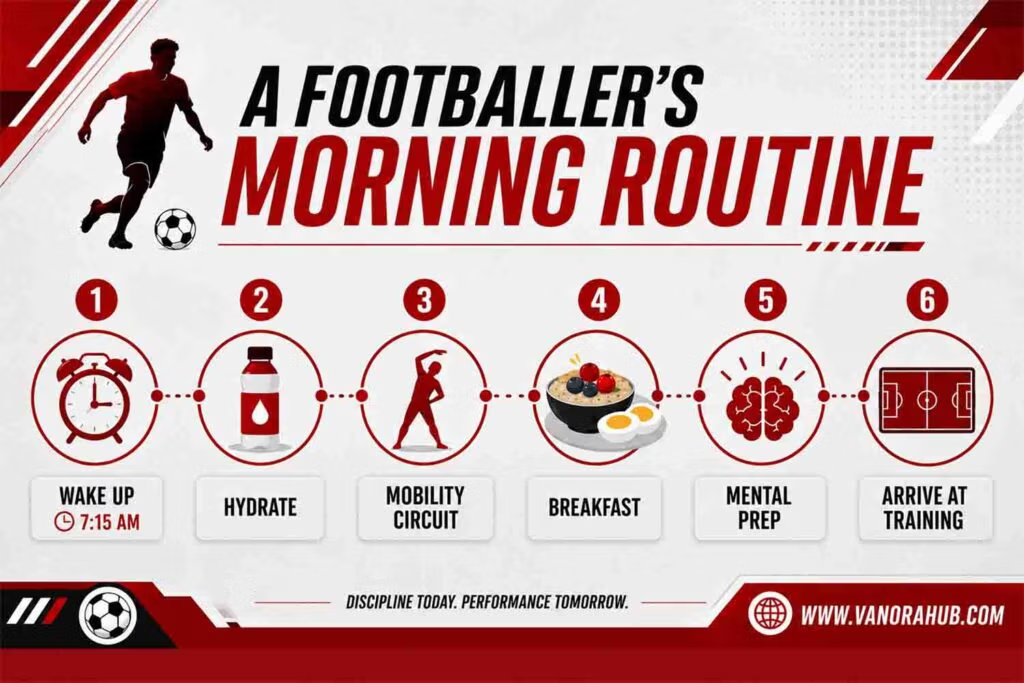
A football player’s morning routine follows six core steps: waking at a consistent time, rehydrating immediately, completing a short mobility circuit, eating a carbohydrate-and-protein breakfast, spending a few minutes on mental preparation, and getting to the training ground early. This is an example structure, not a medically validated six-step protocol.
Quick Overview: Morning Routine at a Glance
Here is a quick overview of what a football player’s morning routine can look like. The timings are examples and can be adjusted.
| Routine Step | Time Needed | Why It Matters |
| Wake-up and sleep consistency | Same time daily | Keeps the body’s internal clock stable |
| Hydration | 5 minutes | Replaces fluid lost overnight through breathing and sweat |
| Mobility and activation | 10–15 minutes | Prepares joints, hips, and ankles for movement |
| Breakfast | 20–30 minutes | Refuels glycogen stores and supports concentration |
| Mental preparation | 5–10 minutes | Builds focus before training or matchday |
| Light movement or walk | 10 minutes | Increases blood flow and shakes off sluggishness |
What a Football Player Morning Routine Actually Looks Like (Step by Step)
A practical morning plan can include drinking, eating, gentle movement and time to get organised. The order can change on training, match and recovery days. A short routine should support adequate sleep, not require an unnecessarily early alarm.
Start with habits that fit your life. Preparing a kit bag and breakfast ingredients the evening before can reduce rushing in the morning.
Wake-Up Time: Why Consistency Beats a Lie-In
Waking up at the same time every day matters more than the exact hour. The NHS recommends keeping a regular sleep and wake schedule because it stabilises the body’s circadian rhythm, which directly affects alertness, mood, and physical coordination throughout the day.
Professional players’ sleep arrangements are individual and should not be copied without considering your own needs. A regular sleep schedule and enough time asleep are more useful starting points than celebrity anecdotes.
Practical tip: Set one fixed alarm. No snooze. If you struggle to wake up, move the alarm across the room so you have to stand up to turn it off physically.

Hydration First: Replacing What You Lost Overnight
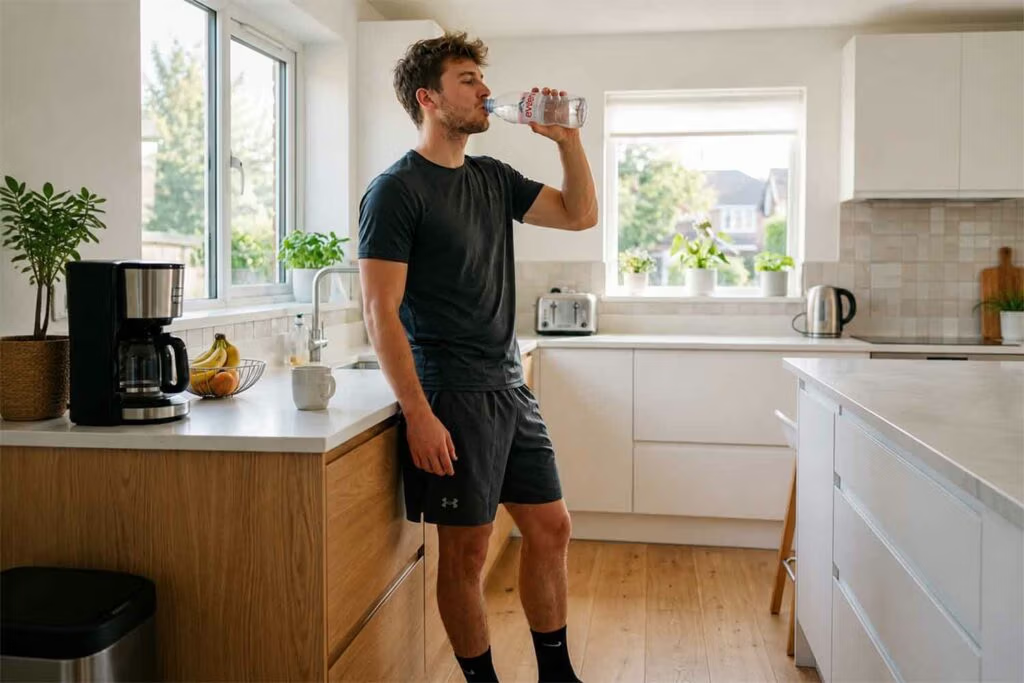
Keep water available and drink through the morning according to your needs. Overnight fluid losses vary; there is no fixed amount that every player must replace immediately after waking.
The British Dietetic Association’s hydration guidance explains that fluid needs vary. Body size, weather, sweat losses and the planned session all matter. Avoid forcing large volumes at once. For football-specific examples, see our hydration guide.
What about coffee? Coffee is optional, not a requirement for readiness. Consider its effect on your sleep and how you tolerate it. Younger players should discuss caffeinated drinks with a parent or qualified health professional; energy drinks are not a substitute for food, water or rest.
Morning Mobility and Activation Drills for Footballers
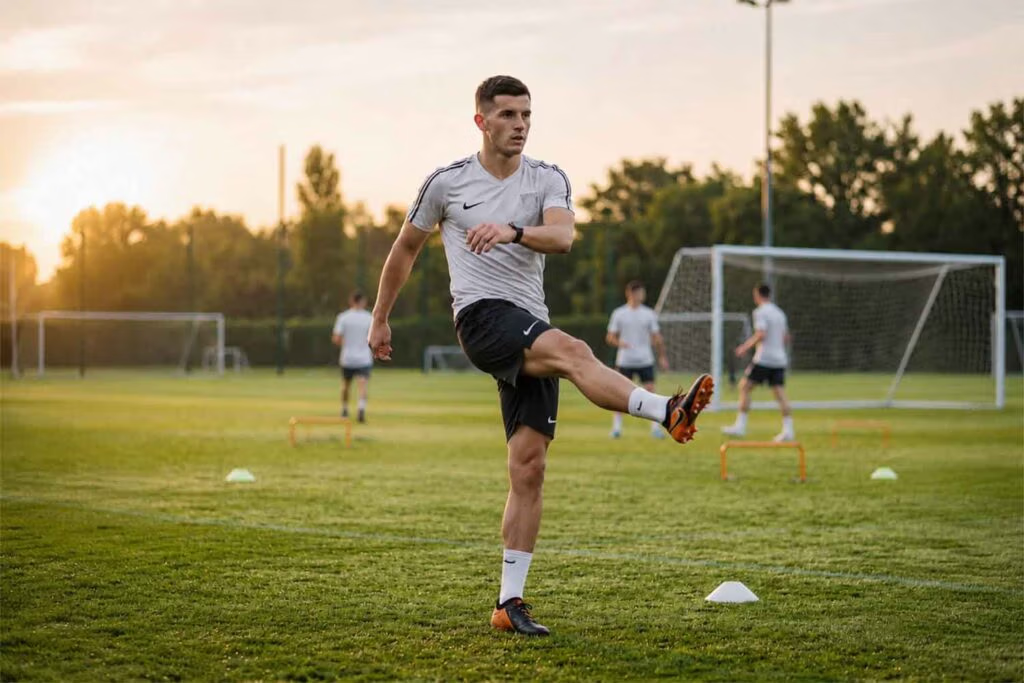
A 10 to 15 minute mobility session before breakfast wakes up the muscles and joints that training will load later in the day. Keep it gentle and within a comfortable range. It does not replace the progressive warm-up before training.
Example gentle mobility circuit:
| Exercise | Duration | Target Area |
| Hip circles (both directions) | 30 seconds each side | Hip flexors and glutes |
| Ankle circles | 20 seconds each side | Ankle mobility |
| Leg swings (forward and lateral) | 10 each direction | Hip range of motion |
| Cat-cow stretches | 8–10 reps | Spine and core activation |
| Bodyweight squats | 10 reps, slow tempo | Quads, glutes, ankles |
| Walking lunges | 8 each leg | Full lower body activation |
None of this requires equipment. You can do it in your bedroom in your pyjamas.
Tip: Choose only movements you can perform comfortably and with control. Reduce repetitions or skip a movement that causes pain. Morning mobility is optional; a suitable warm-up before the actual session remains important.
Breakfast: What to Eat Before Football Training
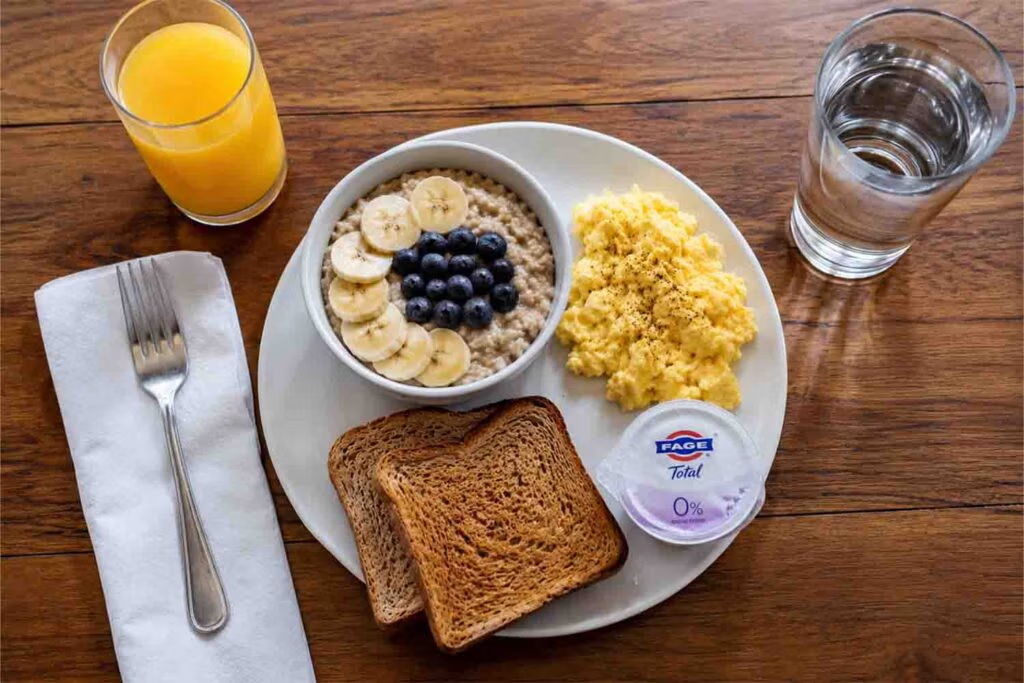
Breakfast can help fuel a morning session. Include familiar carbohydrate foods and a protein source, allowing time for digestion. Portion size and timing depend on appetite, training intensity and individual tolerance.
The BDA’s sport and exercise guidance gives broader nutrition advice. These breakfast ideas are examples, not calculated meal prescriptions:
| Breakfast Option | Main Components | Best For |
| Oats + banana + milk or yoghurt | Carbohydrates and protein | Training day, with time to digest |
| 2 scrambled eggs on 2 slices wholemeal toast + OJ | Carbohydrates and protein | Match day, at a familiar meal time |
| Yoghurt (200g) + granola (50g) + mixed berries | Carbohydrates and protein | Light training or recovery day |
Choose portions that suit the planned session and your usual diet. Supplements are not essential to put together a practical breakfast.
For teenagers: Growing athletes have different nutritional needs. Portion sizes and specific plans should involve a parent or guardian and, ideally, a registered sports dietitian not a copied meal plan from social media.
Mental Preparation and Visualisation Before Training
A few quiet minutes can help you decide what to focus on in training. Pick a simple intention, such as scanning before receiving or recovering quickly after losing possession. Our Marcus Rashford biography provides related player reading; it is not evidence for a prescribed mental routine.
This is not meditation in the traditional sense, and it does not need to be complicated. Sit somewhere quiet for five minutes, close your eyes, and mentally rehearse three things you want to do well in training today. Picture the run, the pass, the tackle. Mental rehearsal may help some players focus, but it does not replace physical practice.
A note on nerves: Some nerves before a match or trial are common. But if anxiety or sleep problems start affecting your daily life beyond football, speak to a GP or a qualified sports psychologist rather than trying to push through alone. The NHS provides guidance on managing anxiety that is worth reading.
Sample Football Player Morning Routine
Here is how a typical training-day morning looks for a player with a 10 AM session. Adjust the times forward or back depending on your own schedule; the gaps between steps matter more than the exact clock times.
| Time | Step | Details |
| 7:15 AM | Wake up | Same time every day, no snooze button |
| 7:15–7:20 | Hydrate | Have water available and drink to your needs |
| 7:20–7:35 | Mobility circuit | Hip circles, ankle circles, leg swings, cat-cow, squats, lunges |
| 7:35–8:00 | Breakfast | Oats with banana and milk, or eggs on toast |
| 8:00–8:10 | Mental preparation | Visualise 3 things to do well in training |
| 8:10–8:20 | Light walk / movement | Walk to car, cycle, or 10-min neighbourhood walk |
| 8:30–9:00 | Travel to training | Arrive at least 30 minutes early |
| 9:30 | Full warm-up begins | Club-led warm-up on the pitch |
How Long Before You See Results
There is no fixed timeline for improved energy or performance. Start with a few manageable habits and notice how you feel across training and recovery days. Persistent tiredness, poor sleep or difficulty recovering deserves individual advice rather than a promise that a routine will fix it.
Common Mistakes That Ruin a Football Player’s Morning
Common problems to avoid include:
1. Skipping breakfast before an early session
Usually because of nerves or running late. Even a banana and a glass of milk is better than arriving at training on empty. Choose familiar foods you can tolerate before exercise.
2. Waking up at wildly different times on training days versus rest days
Large changes in sleep and wake times can make a routine harder to maintain. Aim for a schedule that allows enough sleep alongside school, work and football.
3. Jumping straight into sprints or ball work without mobility work
Build up the intensity gradually in the session warm-up. An optional mobility routine earlier in the morning does not remove that need.
4. Checking the phone immediately after waking
If checking your phone leaves you rushing breakfast or travel, set it aside until the essentials are done. This is an organisational choice, not a claim about a guaranteed brain-chemistry effect.
Frequently Asked Questions
What time do professional footballers wake up?
Wake-up times vary with training, matches, travel and recovery. There is no single professional timetable to copy. Work backwards from your session while protecting enough sleep.
Should I eat before or after morning football training?
Eating beforehand can help fuel training. For an early session, a light familiar snack may be easier to tolerate, followed by a fuller meal afterwards. Adjust timing and portion size to the session and your digestion; seek personalised advice if you have specific dietary needs.
Is stretching alone enough to prepare for football training?
A short morning mobility routine reduces stiffness and gets blood flowing, but it does not replace a proper warm-up. Think of morning mobility as clearing the overnight rust. The actual warm-up done at the training ground 15 to 30 minutes before the session — should include movement-specific drills, progressive intensity, and ball touches. Morning mobility is optional; it does not substitute for the session warm-up.
How much water should a footballer drink in the morning?
There is no single morning volume for everyone. Keep water available, consider thirst and the conditions, and avoid drinking large amounts just to meet an arbitrary target. A qualified sports dietitian can help plan fluids for demanding training or unusually high sweat losses.
Can teenagers follow a professional footballer’s morning routine?
Yes, with adjustments. Teenagers need more sleep than adults — typically 8 to 10 hours for ages 13–18, so allow for that when setting wake-up times. The routine structure (hydrate, move, eat, focus) can be adapted, but nutrition plans should be guided by a parent or guardian and ideally a registered sports dietitian, not copied from a professional athlete’s social media.
What do footballers drink in the morning besides water?
Milk or a suitable fortified alternative can be part of breakfast. Other drinks depend on preference and dietary needs. Sports drinks can have a role in some prolonged or demanding sessions, but they are not an everyday requirement.
Conclusion
A football player’s morning routine is not about luxury habits or complicated biohacking. It is six repeatable steps: consistent wake-up, immediate hydration, a short mobility circuit, a balanced breakfast, five minutes of mental focus, and arriving at training with time to spare. Adapt these steps to your session and recovery needs.
Start with two habits tomorrow. Set a fixed alarm time and put a water bottle next to your bed. Try these habits consistently and adjust if they interfere with sleep. Then add the mobility circuit. Then fix breakfast. Build the routine one layer at a time, while keeping rest and the overall training load in view.
Connect your daily habits to the bigger picture with our weekly football fitness guide. A training attendance record can help you review consistency without turning rest days into missed targets or adding sessions simply to raise a percentage.

3 comments on “Football Player Morning Routine – 2026 Guide”