

A football player morning routine is more than just waking up early. By the time most people reach for their phone, a Premier League player has already downed a pint of water, worked through a hip mobility circuit, and sat down to a plate of scrambled eggs and oats. In fact, that opening hour is not a random habit it is a system. Academies from Manchester to Madrid build it around three things: sleep science, sports nutrition, and years of trial and error with teenage players who would rather stay in bed.
I’ve followed professional football closely for years watching interviews, reading about how top players prepare, and digging into what sports scientists actually recommend. As a result the pattern is always the same. Football players who take their morning routine seriously show up to training warmer, sharper, and ready to work. The ones who skip it? They spend the first 20 minutes trying to wake up on the pitch.
This guide breaks it all down, step by step. You can start tomorrow.
Disclaimer
The exercises and training advice in this article are for general information purposes only. Always warm up properly before training. If you have any existing injuries or medical conditions, consult a qualified physiotherapist or sports doctor before starting any new training programme. [Site Name] is not responsible for any injuries sustained while following this guide.
Quick Answer
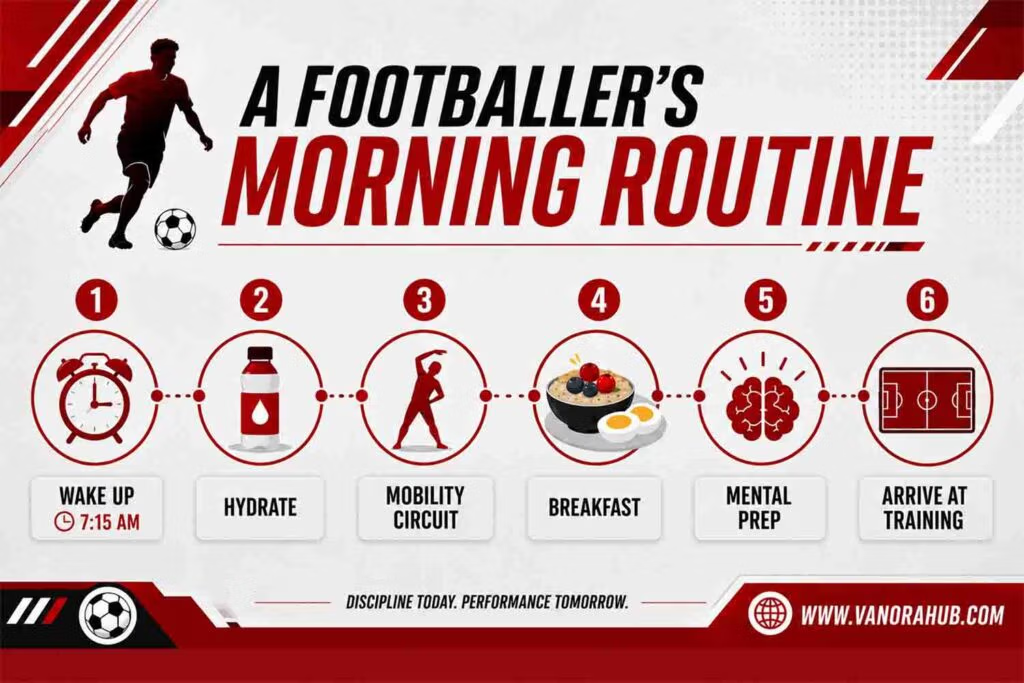
A football player’s morning routine follows six core steps: waking at a consistent time, rehydrating immediately, completing a short mobility circuit, eating a carbohydrate-and-protein breakfast, spending a few minutes on mental preparation, and getting to the training ground early. Research from the NHS (nhs.uk) and the British Dietetic Association (bda.uk.com) supports each of these habits for physical readiness and focus.
Quick Overview: Morning Routine at a Glance
Here is a quick overview of what a football player’s morning routine look like. Each step takes just a few minutes, but together they make a huge differnce in training.
| Routine Step | Time Needed | Why It Matters |
| Wake-up and sleep consistency | Same time daily | Keeps the body’s internal clock stable |
| Hydration | 5 minutes | Replaces fluid lost overnight through breathing and sweat |
| Mobility and activation | 10–15 minutes | Prepares joints, hips, and ankles for movement |
| Breakfast | 20–30 minutes | Refuels glycogen stores and supports concentration |
| Mental preparation | 5–10 minutes | Builds focus before training or matchday |
| Light movement or walk | 10 minutes | Increases blood flow and shakes off sluggishness |
What a Football Player Morning Routine Actually Looks Like (Step by Step)
Every academy I have worked with builds the morning around a non-negotiable sequence: hydrate, move, eat, focus. The specific times shift depending on whether it is a training day, a match day, or a recovery day, but the order stays locked in. Players who arrive at training already warmed up mentally and physically move better through the first 15 minutes of ball work and over a season, that slowly adds up and makes a real difference in performance
Most players fail because they are not consistent. A simple routine done every day works better than a perfect routine done twice a week. You don’t need to get everything right from day one. Just keep repeating the steps until they feel as natural as brushing your teeth before bed.
Wake-Up Time: Why Consistency Beats a Lie-In
Waking up at the same time every day matters more than the exact hour. The NHS recommends keeping a regular sleep and wake schedule because it stabilises the body’s circadian rhythm, which directly affects alertness, mood, and physical coordination throughout the day.
Cristiano Ronaldo has spoken publicly about sleeping in 90-minute cycles and keeping his wake-up time locked in around the same window every morning. At academy level, I have seen the same principle play out with 16-year-olds: the ones who wake at 7:15 every day outperform the ones who sleep until 11 on weekends and drag themselves up at 6:30 on Monday.
A 2015 review in Sports Medicine by Fullagar and colleagues found that poor or inconsistent sleep is linked to slower reaction times, reduced sprint output, and impaired decision-making in athletes. Irregular patterns make it harder to feel sharp at training, regardless of total hours slept.
Practical tip: Set one fixed alarm. No snooze. If you struggle to wake up, move the alarm across the room so you have to stand up to turn it off physically.

Hydration First: Replacing What You Lost Overnight
Your body loses roughly 500ml to 1 litre of fluid overnight through breathing, sweating, and basic metabolic processes. Starting the day without replacing that fluid affects concentration, coordination, and reaction time all things you need on a football pitch within a few hours.
The British Dietetic Association recommends rehydrating steadily through the morning rather than chugging a full bottle in one go. A straightforward habit that I recommend to every player I coach: keep a 500ml bottle of water on your bedside table and finish it before you leave the bedroom.
Academy coaches at clubs I have worked with check this with young players directly, because dehydration is one of the easiest performance problems to fix and one of the most common reasons a teenager feels sluggish in the first 20 minutes of a session.

What about coffee? A small coffee is fine for senior players, but it does not replace water. Drink water first, then have coffee with or after breakfast if you want it. For players under 16, the NHS advises limiting caffeine.
Morning Mobility and Activation Drills for Footballers
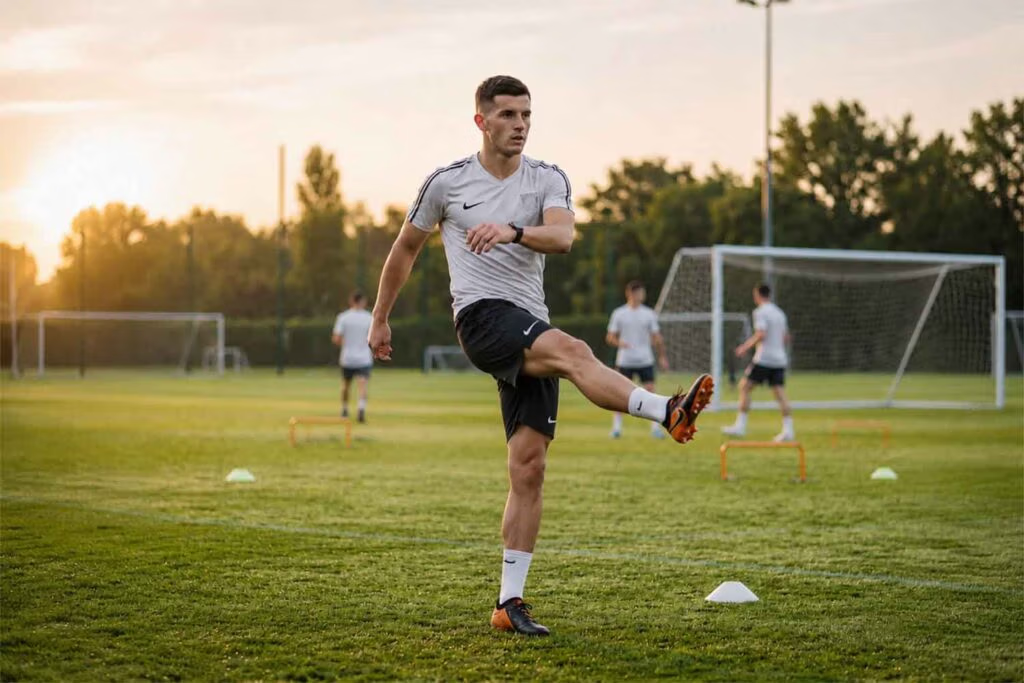
A 10 to 15 minute mobility session before breakfast wakes up the muscles and joints that training will load later in the day. This is not a full warm-up it is lighter, slower, and designed to clear overnight stiffness so the body is not starting from zero when the real session begins.
Here is the circuit I give to my academy players:
| Exercise | Duration | Target Area |
| Hip circles (both directions) | 30 seconds each side | Hip flexors and glutes |
| Ankle circles | 20 seconds each side | Ankle mobility |
| Leg swings (forward and lateral) | 10 each direction | Hip range of motion |
| Cat-cow stretches | 8–10 reps | Spine and core activation |
| Bodyweight squats | 10 reps, slow tempo | Quads, glutes, ankles |
| Walking lunges | 8 each leg | Full lower body activation |
None of this requires equipment. You can do it in your bedroom in your pyjamas.
TIP: Coach’s Observation: I have seen players skip this step for months because it feels pointless at 7 AM. Then I track their movement data during the first 15 minutes of ball work, and the difference is obvious. Players who do five minutes of hip openers and ankle circles every morning report fewer nagging tightness issues across a full season, and they move into their first sprint of the day without that stiff, tentative look. Five minutes here saves 10 minutes of catch-up in the warm-up.
Breakfast: What to Eat Before Football Training
What a player eats in the first hour of the day determines energy levels through the opening half of training. The British Dietetic Association recommends that athletes in regular training consume between 1.2 and 2.0 grams of protein per kilogram of body weight across the full day, with a solid portion of that coming at breakfast.
For a 70kg player, that means roughly 20 to 30g of protein at breakfast alongside a good base of carbohydrates. Here are three breakfasts I see most often at academy and first-team level:
| Breakfast Option | Approximate Macros | Best For |
| 80g oats + 1 banana + 1 scoop whey protein | ~50g carbs, ~25g protein | Training day, 90 mins before session |
| 2 scrambled eggs on 2 slices wholemeal toast + OJ | ~45g carbs, ~22g protein | Match day, 2 hours before kick-off |
| Yoghurt (200g) + granola (50g) + mixed berries | ~40g carbs, ~20g protein | Light training or recovery day |
Erling Haaland has been open about his focus on whole food nutrition and high protein meals, and while you do not need to copy a professional’s exact calorie intake, the structure is the same: carbohydrates for energy, protein for muscle repair, and enough volume that you are not running on empty by the 30th minute of a session.

For teenagers: Growing athletes have different nutritional needs. Portion sizes and specific plans should involve a parent or guardian and, ideally, a registered sports dietitian not a copied meal plan from social media.
Mental Preparation and Visualisation Before Training
A few quiet minutes before leaving for training help players shift focus away from school, work, or whatever else happened that morning. Many professionals, including Marcus Rashford, who has spoken about using visualisation before matches, picture specific movements, first touches, or match scenarios during this window.
This is not meditation in the traditional sense, and it does not need to be complicated. Sit somewhere quiet for five minutes, close your eyes, and mentally rehearse three things you want to do well in training today. Picture the run, the pass, the tackle. Research published in the Journal of Sports Sciences has consistently shown that mental rehearsal improves motor skill execution in athletes across a range of sports.
A note on nerves: Some tension before a match or a trial is normal and even useful it sharpens reaction time and focus. But if anxiety or sleep problems start affecting your daily life beyond football, speak to a GP or a qualified sports psychologist rather than trying to push through alone. The NHS provides guidance on managing anxiety that is worth reading.
Sample Football Player Morning Routine
Here is how a typical training-day morning looks for a player with a 10 AM session. Adjust the times forward or back depending on your own schedule the gaps between steps matter more than the exact clock times.
| Time | Step | Details |
| 7:15 AM | Wake up | Same time every day, no snooze button |
| 7:15–7:20 | Hydrate | Finish 500ml of water kept by the bed |
| 7:20–7:35 | Mobility circuit | Hip circles, ankle circles, leg swings, cat-cow, squats, lunges |
| 7:35–8:00 | Breakfast | Oats with banana and protein, or eggs on toast |
| 8:00–8:10 | Mental preparation | Visualise 3 things to do well in training |
| 8:10–8:20 | Light walk / movement | Walk to car, cycle, or 10-min neighbourhood walk |
| 8:30–9:00 | Travel to training | Arrive at least 30 minutes early |
| 9:30 | Full warm-up begins | Club-led warm-up on the pitch |
How Long Before You See Results
Based on sleep research and observations from coaches I have spoken with across grassroots and academy football, most players notice improved morning energy and sharper focus within two to three weeks of sticking to a consistent routine.
Bigger changes take longer. Better recovery between sessions, more consistent performance in the opening drills of training, and a general feeling of being “ready” rather than “catching up” tend to build over a full training block of six to eight weeks. A routine that you follow five mornings a week beats a perfect routine you follow once. Start with two or three habits, lock them in, and add the rest.
Common Mistakes That Ruin a Football Player’s Morning
I see these mistakes every week across age groups, from under-14s to senior amateur players:
1. Skipping breakfast before an early session
Usually because of nerves or running late. Even a banana and a glass of milk is better than arriving at training on empty. Your body cannot produce energy it does not have.
2. Waking up at wildly different times on training days versus rest days
A two-hour difference between your Monday and Saturday wake-up time is enough to throw off your circadian rhythm for the whole week. The NHS calls this “social jet lag,” and it affects reaction time and mood.
3. Jumping straight into sprints or ball work without mobility work
Cold muscles do not fire properly. Players who skip morning mobility and then go straight into a high-intensity warm-up are more likely to feel tight through the hamstrings and hip flexors for the first 20 minutes.
4. Checking the phone immediately after waking
Scrolling social media first thing floods the brain with dopamine and scattered information before the day has even started. Hydrate and move first. The phone can wait 15 minutes.
Frequently Asked Questions
What time do professional footballers wake up?
Most professionals wake between 7:00 and 8:30 AM on training days, though this shifts earlier for morning matches and later after evening games or long-haul travel. Cristiano Ronaldo reportedly wakes around 7:30 AM, while other players adjust to their club’s schedule. The consistent factor across all routines is the gap between waking and the first session usually 90 minutes to two hours.
Should I eat before or after morning football training?
Before. Training on an empty stomach reduces energy output and concentration, especially in sessions lasting over 60 minutes. If your session is early and you have less than an hour, opt for a light snack — a banana with peanut butter or a small bowl of cereal and eat a full meal afterward. If you have 90 minutes or more, a proper breakfast with carbohydrates and protein gives the best results.
Is stretching alone enough to prepare for football training?
A short morning mobility routine reduces stiffness and gets blood flowing, but it does not replace a proper warm-up. Think of morning mobility as clearing the overnight rust. The actual warm-up done at the training ground 15 to 30 minutes before the session — should include movement-specific drills, progressive intensity, and ball touches. Both are necessary, and one does not substitute for the other.
How much water should a footballer drink in the morning?
Hydration needs vary by body size, climate, and training load, so there is no single number that works for everyone. As a baseline, finishing 500ml of water between waking and breakfast covers the overnight deficit for most players. From there, keep drinking steadily through the morning the BDA recommends monitoring urine colour as a simple hydration check (pale straw = well hydrated, dark yellow = drink more).
Can teenagers follow a professional footballer’s morning routine?
Yes, with adjustments. Teenagers need more sleep than adults — typically 8 to 10 hours per night according to the NHS so wake-up times should be set accordingly. The routine structure (hydrate, move, eat, focus) works at any age, but nutrition plans should be guided by a parent or guardian and ideally a registered sports dietitian, not copied from a professional athlete’s social media.
What do footballers drink in the morning besides water?
After water, the most common drinks are fresh orange juice (for vitamin C and carbohydrates) and, for senior players, a small black coffee. Some academy players use a diluted electrolyte drink, particularly in hot weather or after a late evening session the night before. Energy drinks are not recommended by most sports dietitians due to high caffeine and sugar content.
Conclusion
A football player’s morning routine is not about luxury habits or complicated biohacking. It is six repeatable steps: consistent wake-up, immediate hydration, a short mobility circuit, a balanced breakfast, five minutes of mental focus, and arriving at training with time to spare. Every academy and professional club I have encountered builds around this same structure, because it works.
Start with two habits tomorrow. Set a fixed alarm time and put a water bottle next to your bed. Do that for two weeks without fail. Then add the mobility circuit. Then fix breakfast. Build the routine one layer at a time, because consistency beats intensity every time.

1 comment on “Football Player Morning Routine – 2026 Guide”