
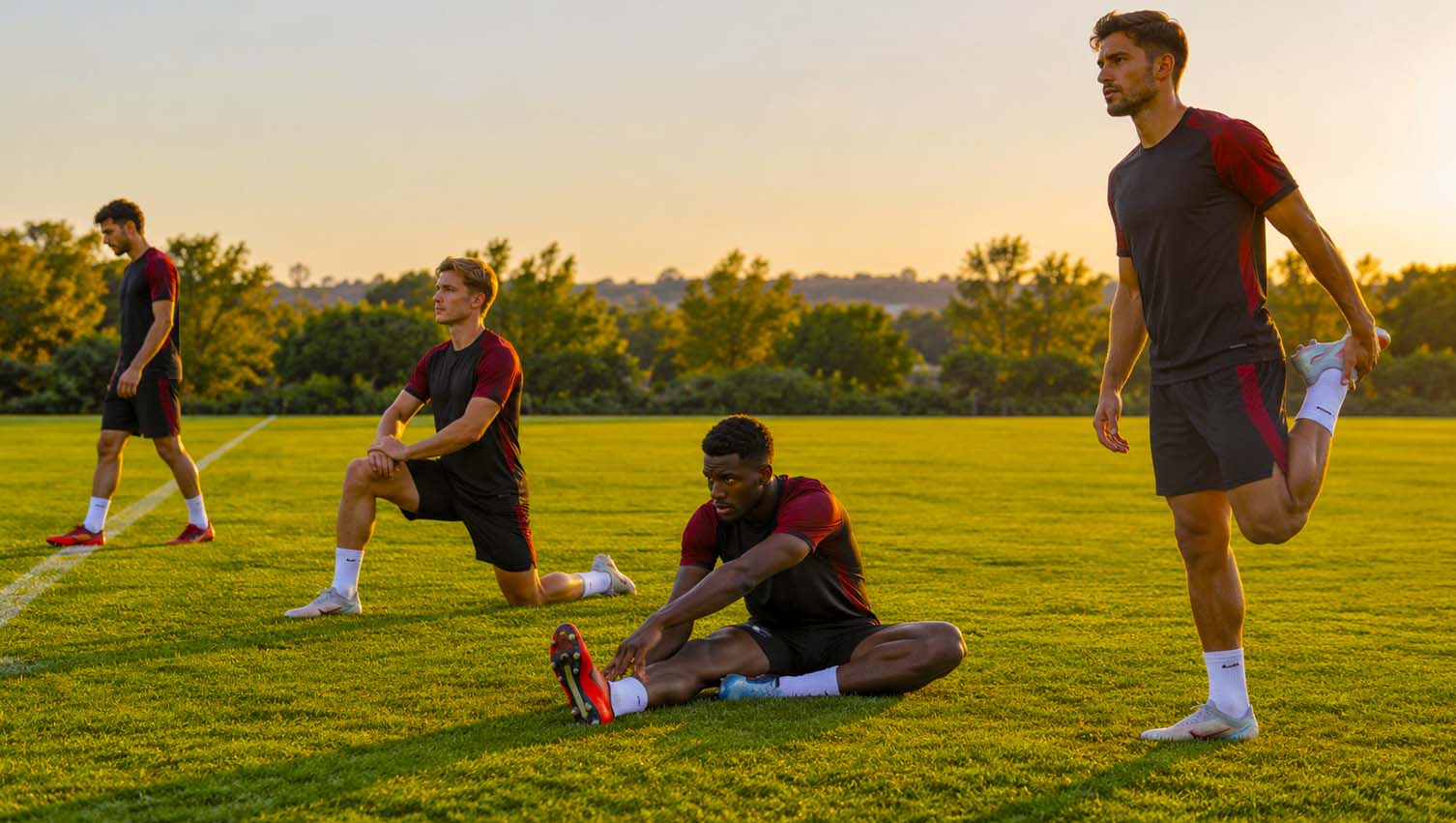
On a really tough ball practice, lots of players pack their bags and head home off-field without cooling down. It doesn’t sound as bad as you might think, but if you skip recovery the next day you will be stiff and tired. When playing football your heart rate goes up, as does your body temperature, and your muscles are used to sprint, tackle, jump and change direction. Additional minutes of relaxation to give your system a little more time to drop down can help you lead a comfortable lifestyle following training, and also allow you to ready yourself for your next workout.
The lucky thing is that you don’t need fancy gear or a gym to recover. A basic cool down routine for a football game can consist of a short walk, some gentle stretches and general relaxation for a few minutes. Through these activities, your body begins to slowly return to the resting state and remains elastic. They can also help to establish a regular recovery routine following training or a game.
Here you will find the best cool down exercises after football training, learn how to do each stretch, how long to hold each stretch and which muscles are stimulated. In addition, there is a quick 10-minute football recovery routine that you can do on the pitch and at home. Post training stretches can help recovery become a part of football.
Whether in an academy or on a club team, or simply taking part in football at the weekends with friends, these stretches can help support your recovery after training.For a more complete training routine, explore our guide to football fitness exercises and learn how to support your performance before and after practice.
| DISCLAIMER
The exercises and training advice in this article are for general information purposes only. Always warm up properly before training. If you have any existing injuries or medical conditions, consult a qualified physiotherapist or sports doctor before starting any new training programme. VanoraHub is not responsible for any injuries sustained while following this guide. |
| Quick Answer
Cool down exercises after football training should start with 3-5 minutes of light jogging or walking to bring your heart rate down, followed by 5-7 minutes of static stretching targeting the quads, hamstrings, calves, hip flexors, glutes, and groin. Done consistently after every session, this reduces next-day muscle soreness and helps prevent soft tissue injuries over a long season. |
Why Cool Down Exercises After Football Training Matter?
After football training a well-organised cool down will allow your body time to slowly come down after a tough session. When playing football, your heart rate rises, your breathing rate accelerates, and your leg muscles are used during sprinting, jumping, tackling and rapid changes of direction.
A quick stop and a direct return home take you apart quicker than a gentle stop and gradual return. A quick 5-minute to 10-minute gentle movement and stretching routine will help you to ease into your recovery after training.
Active recovery activities for footballers are one of the great advantages, as they keep footballers active at a reduced level of exertion following a challenging workout. Walking slowly around the pitch allows your heart rate to lower slowly, for instance, and stretches can keep your hips, quadriceps, calf and hamstring flexible.
These muscles will earn the attention during football training, but after training, this mantra is actually a valuable component of recovery.
It is also important to understand muscle soreness after exercise. There is, unfortunately, a lot of confusion about lactic acid remaining in their systems overnight and hurting the next day. Lactate is normally cleared relatively quickly after exercise, while delayed onset muscle soreness (DOMS) is mainly associated with the stress and microscopic damage that exercise can cause to muscle tissue.
A cool down may help you transition out of intense activity, but it does not guarantee that you will avoid soreness the following day.
There is also a mental benefit to cooling down after a demanding football session. Typically it takes some time to wind down: a few mins walking slowly, stretching and relaxing, while taking a deep breath can give you a chance to settle down before you resume your daily life. Instead of finishing training and immediately rushing to your next task, you create a short break that helps you feel more relaxed and ready to move on with your day.
To ensure the most effective soccer recovery program, it must be easy to perform after each practice. Begin with gentle walking, move to gentle stretching of major leg muscles and conclude with slow, controlled breathing.
There’s no need to have a gym, special equipment, or a set schedule for this activity after football training. A daily cool-down is a simple method to assist you with recovery, whether you’re aiming for your next game or to maintain a steady training schedule.
8 Best Cool Down Exercises After Football Training
Here are eight exercises that should form the base of your post-training routine, in the order you should perform them.
Follow these eight exercises in order. Start with light walking to bring your activity level down gradually, move on to gentle stretches for your legs and hips, and finish with relaxed breathing.
1. Light Jogging or Walking to Cool Down After Football
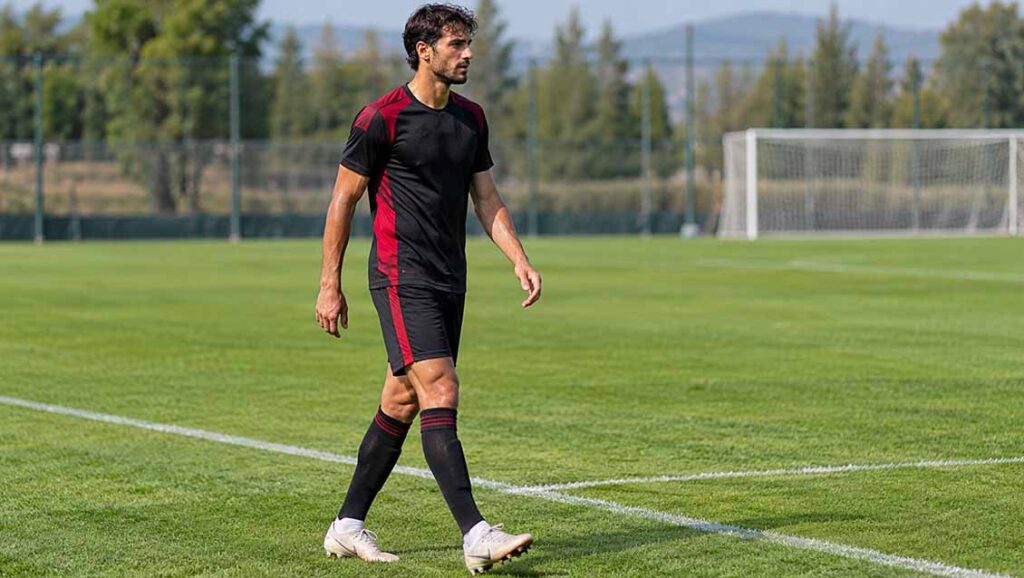
Purpose: To make your heart rate and breathing slowly decrease as your heart rate returns to normal.
How to do it:
- As soon as your training session ends, slow your running pace to a gentle jog.
- After a minute or two, reduce your speed further and start walking around the pitch.
- Let your arms swing naturally and take comfortable breaths. Avoid sudden stops or unnecessary sprinting.
- Continue walking until your breathing feels more controlled and you can speak comfortably without gasping for air.
Common mistake to avoid: Do not finish a hard sprint and immediately sit or lie down if you can safely continue moving. If you feel dizzy, unusually breathless or unwell, stop exercising safely and get appropriate help.
Tip:While doing this, you can also gather your equipment, or make it a slow walk towards the sideline. The goal is to maintain a steady pace, NOT to begin another exercise session.
2. Standing Quad Stretch After Football Training
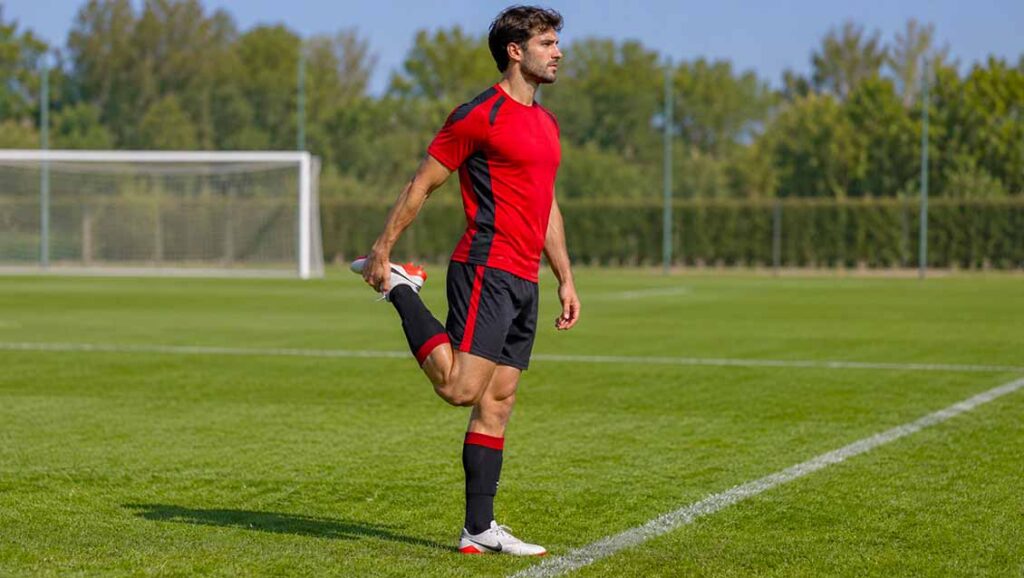
Purpose: To gently stretch the quadriceps, the muscles at the front of your thighs that work during running, shooting and jumping.
How to do it:
- Stand upright with your feet about hip-width apart. Keep your eyes looking forward.
- Shift your weight onto your left leg. If needed, place one hand on a fence or post for balance.
- Bend your right knee and bring your right heel towards your glutes.
- Hold your right ankle or the top of your foot with your right hand. Keep your knees close together and your hips facing forward.
- Stand tall and gently move your hips forward only as far as feels comfortable. You should feel a mild stretch along the front of your right thigh.
- Hold for 30 seconds while breathing normally, then release slowly and repeat on the other leg.
Common mistakes to avoid: Do not pull your foot forcefully, arch your lower back or allow your knee to move far out to the side. If you cannot reach your ankle comfortably, use a stable support for balance and avoid forcing the movement.
Tip: Keep the stretch gentle and steady. You should feel tension in the front of your thigh, not sharp pain in your knee.
3. Seated Hamstring Stretch for Football Recovery
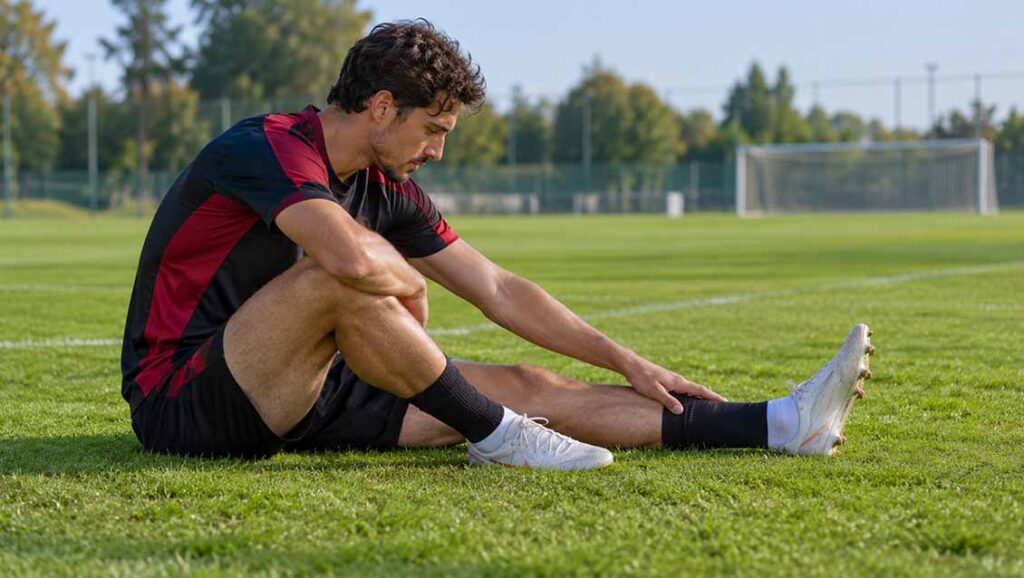
Purpose: To stretch the hamstrings, the muscles at the back of your thighs that help control running, acceleration and changes of direction.
How to do it:
- Sit on the grass with your right leg extended straight in front of you.
- Bend your left knee and bring your left foot towards the inside of your right thigh.
- Sit tall with your shoulders relaxed and your back in a comfortable, neutral position.
- Slowly lean forward from your hips and slide both hands towards your right shin or ankle. Reach towards your toes only if you can do so comfortably.
- Stop when you feel a gentle stretch along the back of your right thigh. You do not need to touch your toes.
- Hold the position for 45 seconds, breathing normally without bouncing.
- Return to an upright position slowly, switch legs and repeat.
Common mistakes to avoid: Do not round your back excessively, force your chest towards your knee or bounce repeatedly to reach further. Stretching should feel controlled rather than painful.
Tip: If sitting on the ground is uncomfortable, you can perform a gentle standing hamstring stretch instead. This makes the exercise easier to adapt to your flexibility.
4. Standing Calf Stretch After Football Training
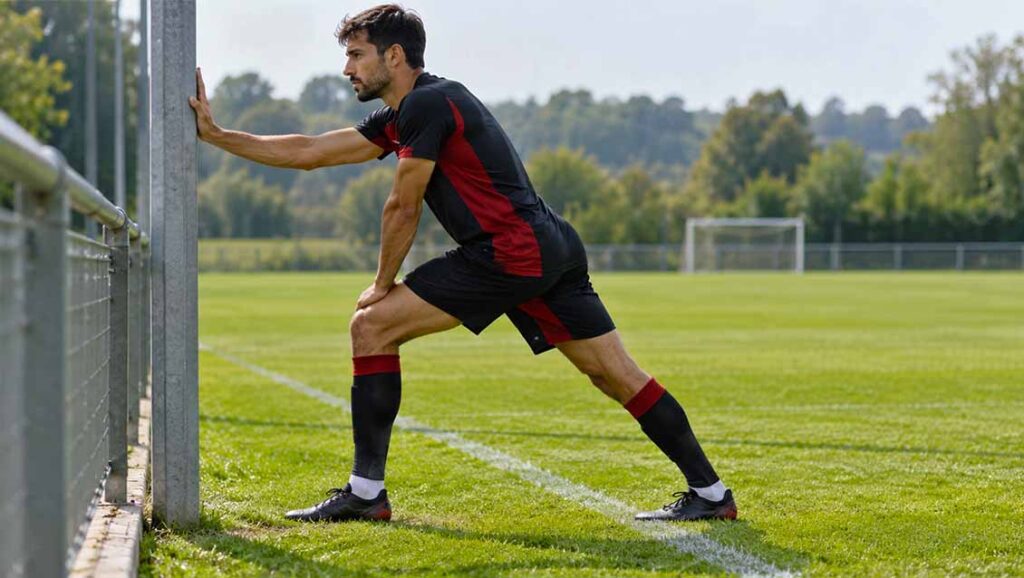
Purpose: To stretch the calf muscles, which help you push off the ground during sprinting, running and jumping.
How to do it:
- Stand facing a wall, fence or sturdy pitch-side post and place your hands against it for support.
- Step your right foot backwards, keeping both feet pointing forward.
- Bend your left knee slightly and keep your right leg straight.
- Slowly lean towards the support while keeping your right heel firmly on the grass.
- Make sure your back foot does not turn outwards and your toes continue pointing forward.
- Hold for 30 seconds, keeping your upper body relaxed.
- Step forward, switch legs and repeat the stretch.
Common mistakes to avoid: Do not lift your back heel, twist your foot outwards or bounce against the support. If your heel keeps lifting, shorten your stance and lean forward less.
Tip: You should feel a gentle pull in the calf of your back leg. Move into the stretch gradually rather than pushing your body forward suddenly.
5. Kneeling Hip Flexor Stretch for Football Players
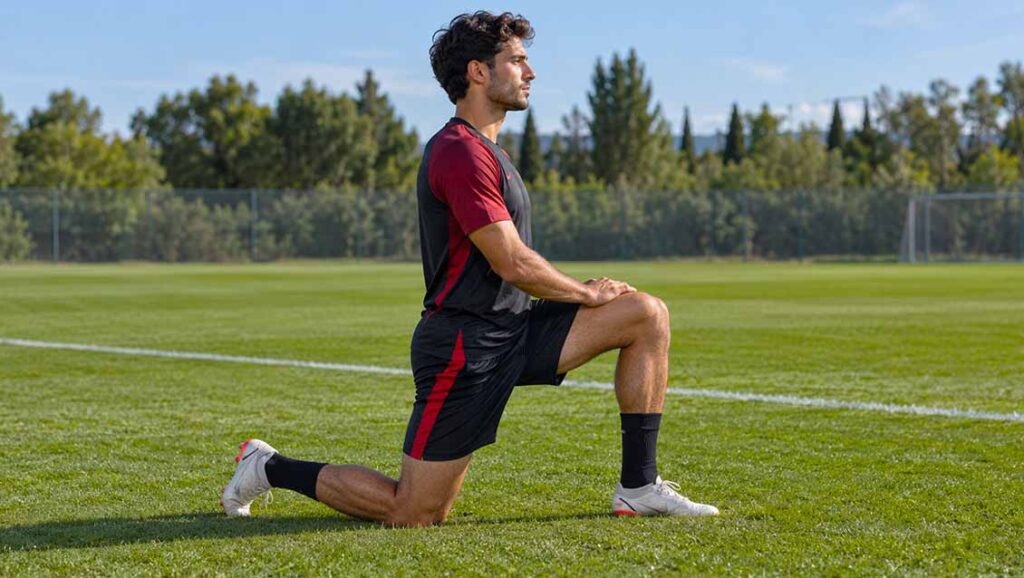
Purpose: To gently stretch the hip flexors at the front of your hips, which help lift your knees and move your legs during football.
How to do it:
- Kneel on your right knee on the grass, with your left foot placed flat in front of you.
- Position your left knee roughly above your left ankle. Your front knee should be bent at approximately 90 degrees.
- Keep your torso upright, shoulders relaxed and eyes looking forward.
- Gently tighten your abdominal muscles and tuck your pelvis slightly, as if bringing your belt buckle upwards.
- Move your hips forward a small amount without arching your lower back.
- Stop when you feel a gentle stretch at the front of your right hip.
- Hold for 30 seconds while breathing normally. Return to the starting position slowly and switch sides.
Common mistakes to avoid: Do not push your hips too far forward, arch your lower back or lean your upper body forward to create a deeper stretch.
Tip: The movement should be small and controlled. You should feel the stretch in the front of the hip on the kneeling side, not pressure in your lower back or pain in your knee.
6. Lying Figure-Four Glute Stretch for Football Recovery
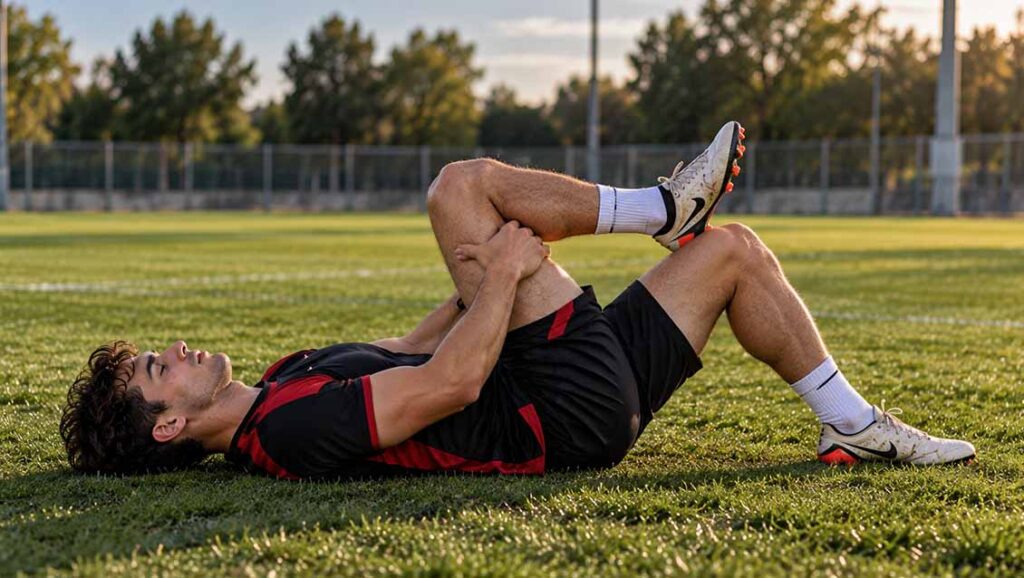
Purpose: To stretch the gluteal muscles around your hips and buttocks, which help you accelerate, change direction and maintain control during football movements.
How to do it:
- Lie on your back on the grass with both knees bent and your feet flat on the ground.
- Lift your right foot and place your right ankle across your left thigh, just above your left knee.
- Keep your right foot gently flexed so that your ankle remains supported.
- Lift your left foot off the ground and bring your left thigh towards your chest.
- Reach around your left thigh with both hands and gently draw it closer to your body.
- Keep your head and shoulders relaxed against the ground.
- Hold for 30 seconds, breathing normally, then lower your legs slowly and repeat on the opposite side.
Common mistakes to avoid: Do not pull directly on your crossed knee, force your ankle into position or lift your head and shoulders to reach further.
Tip: You should feel a gentle stretch in the buttock or outer hip of your crossed leg. If you feel knee pain, release the position and adjust your leg placement.
7. Butterfly Groin Stretch After Football Training
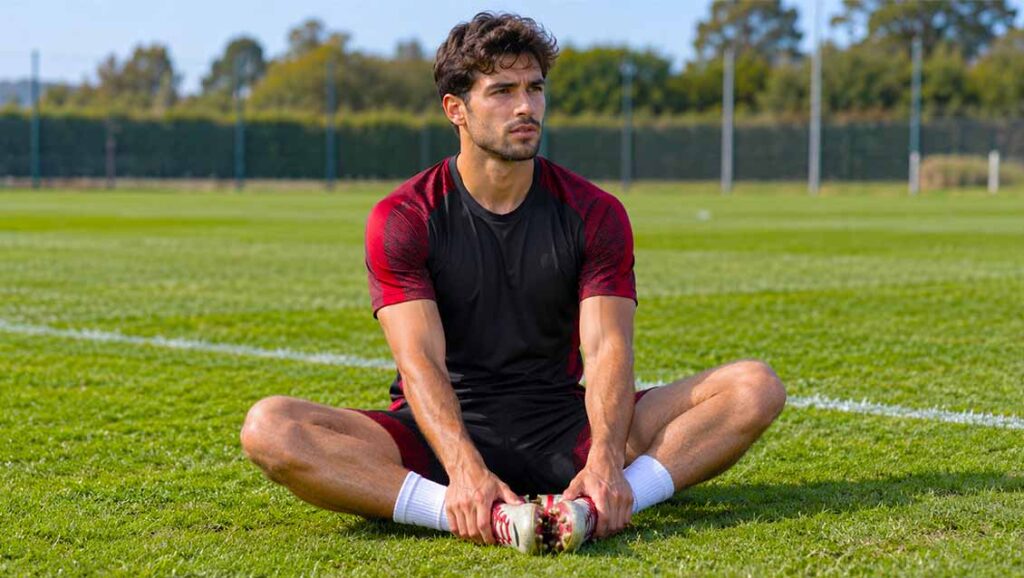
Purpose: To gently stretch the adductor muscles along your inner thighs, which help control leg movement when passing, kicking and changing direction.
How to do it:
- Sit upright on the grass with your legs bent and your knees pointing outwards.
- Bring the soles of your feet together and allow your knees to fall naturally towards the sides.
- Hold your feet or ankles comfortably with both hands.
- Sit tall, relax your shoulders and keep your back in a comfortable position.
- Allow your knees to lower gradually under their own weight. If you want a slightly deeper stretch, lean forward a little from your hips.
- Hold for 45 seconds while breathing normally.
- Release the position gently and extend your legs before standing up.
Common mistakes to avoid: Do not push your knees down forcefully with your hands or elbows. Avoid bouncing or forcing your hips into a position that feels uncomfortable.
Tip: Your flexibility will determine how close your feet can sit to your body. Keep them at a comfortable distance and focus on a gentle stretch along your inner thighs.
8. Deep Breathing After Football Training
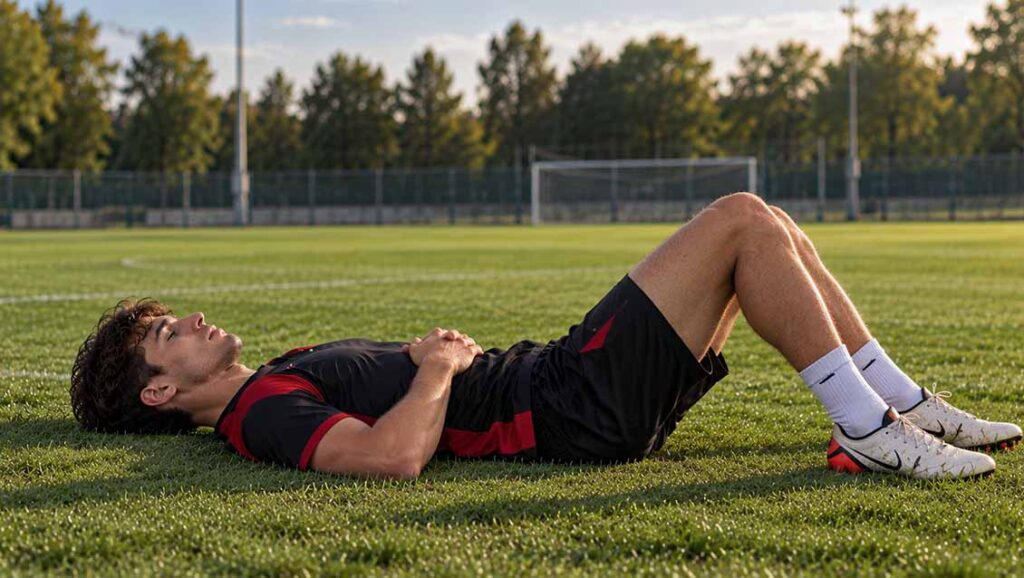
Purpose: To help you relax after training and gradually settle your breathing before moving on with the rest of your day.
How to do it:
- Lie on your back on a comfortable, clean patch of grass. Bend your knees and place your feet flat on the ground.
- Rest your hands gently on your abdomen and allow your shoulders to relax.
- Breathe in slowly through your nose for about four seconds, if comfortable.
- Pause briefly for up to two seconds without straining or holding your breath forcefully.
- Breathe out gently through your mouth for about six seconds.
- Repeat this pattern for one to two minutes, adjusting the timing whenever necessary to remain comfortable.
- Finish with a few normal breaths before sitting up slowly.
Common mistakes to avoid: Do not take excessively deep breaths, force yourself to hold your breath or continue a breathing pattern that makes you feel dizzy.
Tip: The goal is relaxed, comfortable breathing, not achieving a perfect count. If lying on the ground is uncomfortable, sit upright and perform the exercise in that position instead.
Quick Overview: Cool Down Exercises at a Glance
| Exercise | Type | Duration |
| Light jog or walk | Cardiovascular transition | 3-5 minutes |
| Standing quad stretch | Static stretch | 30 sec each leg |
| Hamstring stretch | Static stretch | 45 sec each leg |
| Standing calf stretch | Static stretch | 30 sec each leg |
| Hip flexor stretch | Static stretch | 30 sec each side |
| Glute stretch | Static stretch | 30 sec each side |
| Adductor / groin stretch | Static stretch | 45 sec |
| Deep breathing | Breathing exercise | 1-2 minutes |
How to Build a Football Cool Down Routine
For a simple routine after football training, start with three minutes of walking, then move through the seven stretches and finish with relaxed breathing. Allow enough time to change positions comfortably and stretch both sides where required.
Keep these points in mind:
- Stay gentle: A cool down should feel easier than your main training session.
- Do not force stretches: Stop or adjust any movement that causes sharp pain or discomfort.
- Breathe normally: Avoid holding your breath while stretching.
- Be consistent: Choose a routine that you can realistically follow after most training sessions.
- Remember the basics: Cooling down is only one part of recovery. Adequate sleep, hydration, nutrition and appropriate rest also matter.
These post-training stretches can help you maintain flexibility and make recovery part of your regular football routine. They are not a guarantee against muscle soreness or injuries, but they provide a practical way to finish your session in a controlled and organised manner.
Once you finish your cool-down, keep improving your on-pitch skills with our guide to football ball-control drills.
10-Minute Cool Down Routine for Football Players
Run this routine immediately after every training session or match. No equipment needed.
| Time | Activity |
| 0:00 – 3:00 | Light jog reducing to walk |
| 3:00 – 4:00 | Standing quad stretch (30 sec each leg) |
| 4:00 – 5:30 | Hamstring stretch (45 sec each leg) |
| 5:30 – 6:30 | Calf stretch (30 sec each leg) |
| 6:30 – 7:30 | Hip flexor stretch (30 sec each side) |
| 7:30 – 8:00 | Glute stretch (30 sec each side) |
| 8:00 – 8:45 | Adductor / groin stretch (45 sec) |
| 8:45 – 10:00 | Deep breathing (lying down) |
How Long Before Cool Down Exercises Show Results?
Cool-down exercises may make you feel a bit different after incorporating them into your football routine, but this may differ from player to player. Stretching regularly could help you keep flexible, and a few minutes of walking after training may allow your body to slow down. Beware, however, that the muscle soreness will not just go away after a couple of sessions.
Whether you recover or not also depends on the intensity of your training, the quality of your sleep and the amount of rest you take between sessions.
As for flexibility, it may take a few weeks of regular stretching before you see any improvements. You might find that when you bend forward or lunge, for instance, your hamstrings and hip flexors are not as tight. The study is a 2019 systematic review that was published in the International Journal of Sports Physical Therapy, which looked at the impact of stretching on flexibility.
Results will vary depending on the level of flexibility you start with and the frequency of practice. Cool-down exercises are also important to use, but don’t necessarily protect people from football injuries.
Stretching should be incorporated into your overall recovery and mobility program, as well as adequate warm-ups, strength training, sensible training loads, and rest are also crucial for maintaining fitness for the season.
Consistency and time for adaptation are key. Concentrate on proper execution of each stretch, don’t push beyond a comfortable range, and cool down regularly after football training.
Common Mistakes to Avoid During Football Cool-Down Exercises
- Stopping cold after intense effort. Going from sprints directly to standing still gives your heart no transition time. Always walk for at least 2-3 minutes before you stretch.
- Rushing through stretches. Holding a position for 10 seconds does very little. Each stretch needs at least 30 seconds for the muscle to genuinely lengthen.
- Stretching into pain. Mild tension is the right sensation. Sharp or acute pain means stop immediately and speak to a physiotherapist before your next session.
- Only targeting what is sore. Football works a connected chain of muscles. Stretching only your quads because they ache ignores your hamstrings, hip flexors, and calves, all of which contributed to the same movements.
- Treating the cool down as optional. It is not optional. It is part of the session. Build it in as a fixed step the same way you build in your warm-up.
Frequently Asked Questions
Q1: How Long Should Cool Down Exercises After Football Training Take?
A football cool down should take a minimum of 10 minutes. This covers 3-5 minutes of light cardiovascular wind-down followed by 5-7 minutes of static stretching across the major muscle groups. Players coming off a particularly long or intense session may benefit from extending to 15 minutes.
Q2: Should You Stretch Before or After Football Training?
Dynamic stretching belongs in your warm-up before training. Static stretching, where you hold a position for 30 seconds or more, is most effective after training when your muscles are fully warm and more receptive to lengthening. Doing static stretches before a session can temporarily reduce power output.
Q3: Can I Do Football Cool-Down Exercises at Home?
Yes. All eight exercises in this guide require no equipment and minimal floor space. A yoga mat or a patch of clear floor is all you need. The routine works just as well at home on match days as it does on the training pitch.
Q4: How Quickly Can Football Cool-Down Exercises Improve Flexibility?
A 2019 review in the International Journal of Sports Physical Therapy found measurable flexibility gains in the hamstrings after 4-6 weeks of consistent static stretching. Results vary based on frequency, your starting flexibility, and individual physiology.
Q5: What Happens If You Skip Your Football Cool-Down Routine?
Skipping the cool-down regularly leads to more stiffness the next day, slower recovery between training sessions, and accumulated muscle tightness over a season. A single missed cool-down will not cause an injury, but making it a regular habit significantly raises the risk of soft tissue problems.
Conclusion
After football training it is a free exercise just 10 minutes or so. There’s no need for an ice bath, costly recovery gear or a physio table to begin. Cooling down is no longer a daunting task when it comes to football if you do a quick and simple cool-down routine at the end of the training session. Cooling down with a simple cool-down routine that includes light walking, gentle leg stretches and controlled breathing will make it a regular part of your training when it comes to football. If you want the best cool down exercises for football players, stretches after a football match or a quick cool down routine after soccer practice, there are a few common sense rules to follow: simplicity and consistency.
Run a 10-minute football recovery routine, stretch major muscle groups comfortably and allow the body to recover after heavy activity. Keep in mind these recovery steps, including cooling down: get enough sleep, eat well, drink plenty of water, and rest well. Those who continue to follow their recovery practices are more likely to be ready for their next play. Continue to perform these stretches after the game and after training sessions, and treat your body like it deserves.
