
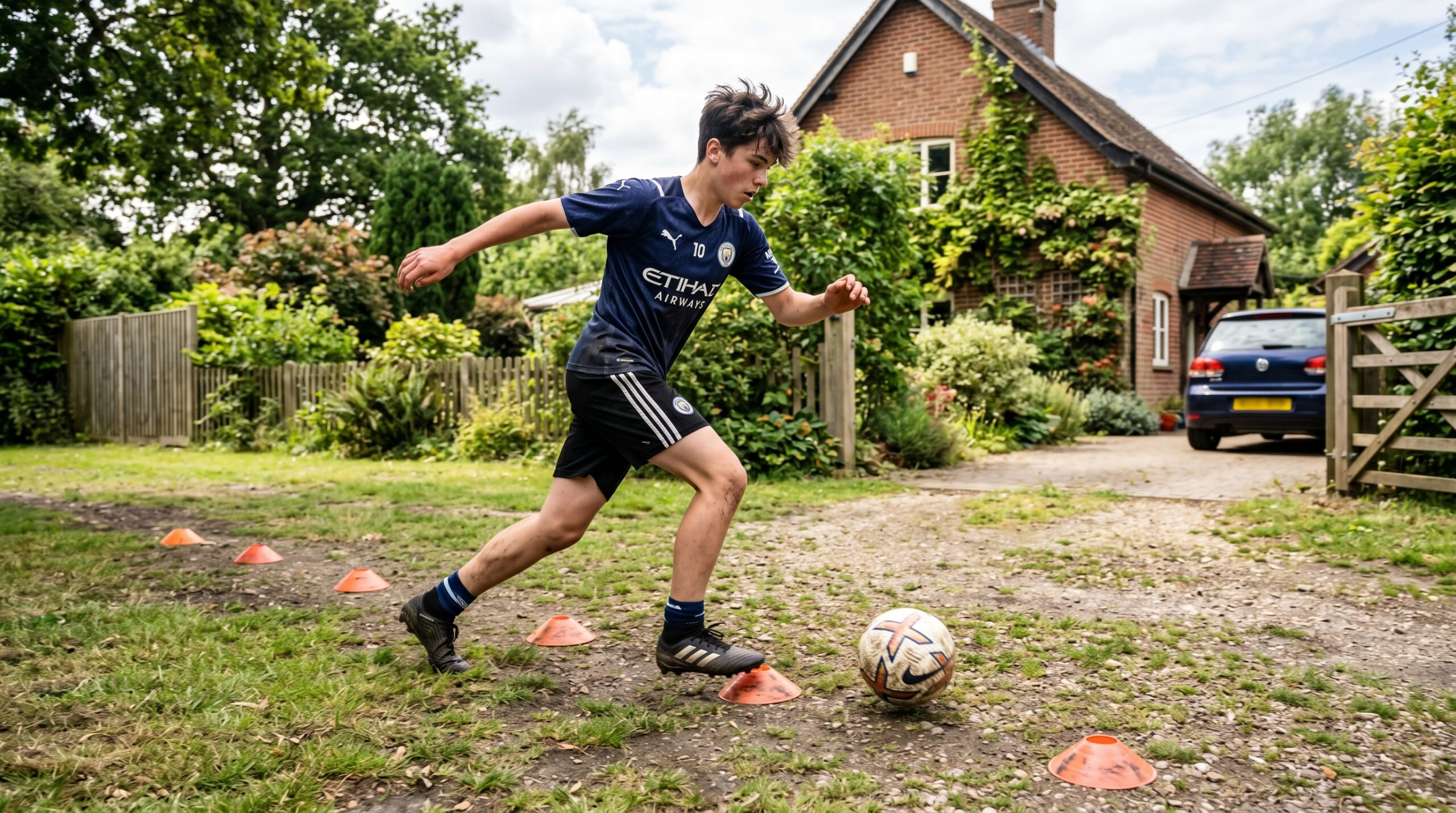
It is not necessary to have a whole team, a coach, and a playing field to learn more about football. Most of the improvements in technique that young players experience come outside of team training, during downtime before matches, simply by playing with the ball.
This home training program for youth players aged 12-18 years old includes information on the technical elements to be learned, the frequency of training, and a realistic session structure. No gym equipment or special devices are required at all.
After going through this program, you will be able to develop a home training schedule; understand which technical elements are most important; know how to measure progress; and avoid common training mistakes that hinder most young players.
Why Home Football Training Makes a Real Difference
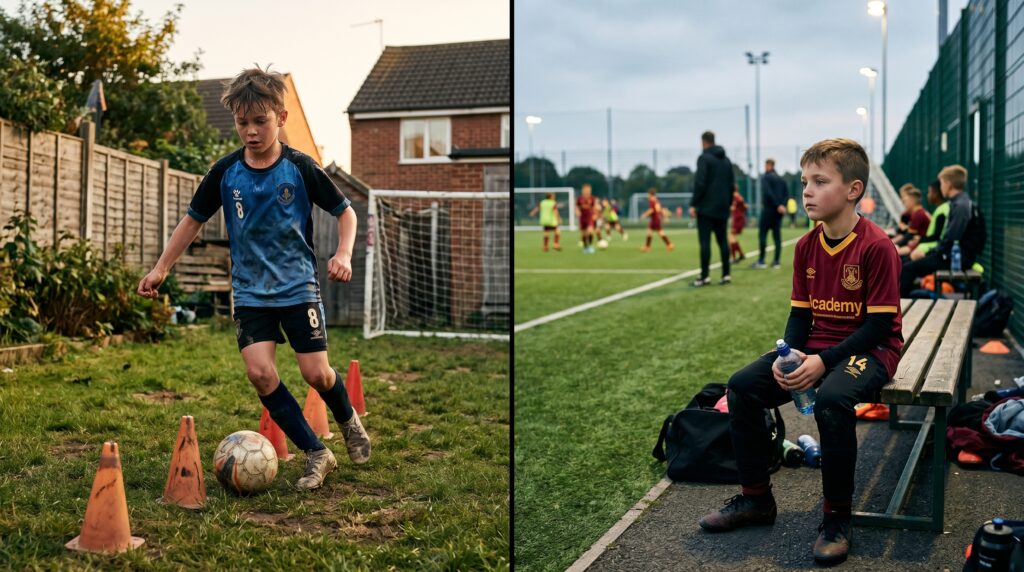
Club training for young players occurs twice or thrice weekly. However, despite such a large number of training sessions, the average length of ninety minutes allows each player to receive only about ten to fifteen minutes of playing time, with the rest spent listening and waiting.
Players who do additional football drill practice at home three or four times a week can make up the difference by repeating certain actions many times during the whole season. The result will be a growing discrepancy between those who train only at clubs and those who practice at home. It should take a month for the player to see the results after doing three hundred additional exercises.
The example of Cristiano Ronaldo, who used to add additional training sessions during his youth practice at Sporting CP, demonstrates how important the idea of practising at home could be. Individual diligence is not the most important element of development, but the basic logic stays the same.
What You Actually Need to Train at Home
Keep the equipment list short. You do not need much to run effective football training at home.
- A football (size 4 for under-14s, size 5 for 14 and over)
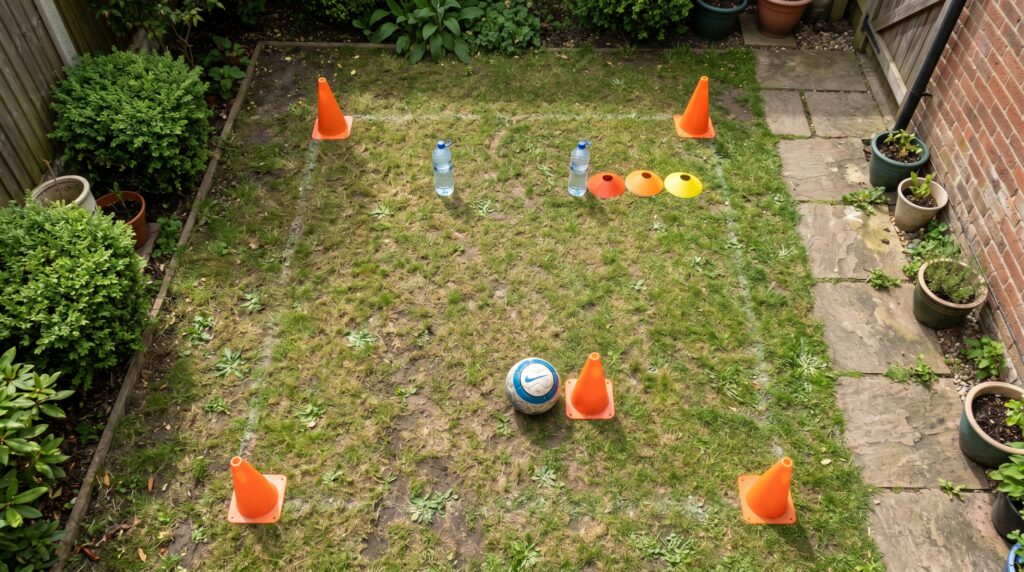
- A flat surface of roughly 5×5 metres minimum (garden, driveway, quiet car park)
- 4–6 flat marker cones or small household objects (water bottles work fine)
- A wall for passing and first-touch work, if available
- Comfortable footwear (football boots on grass, trainers on hard surfaces
The Weekly Home Football Training Schedule
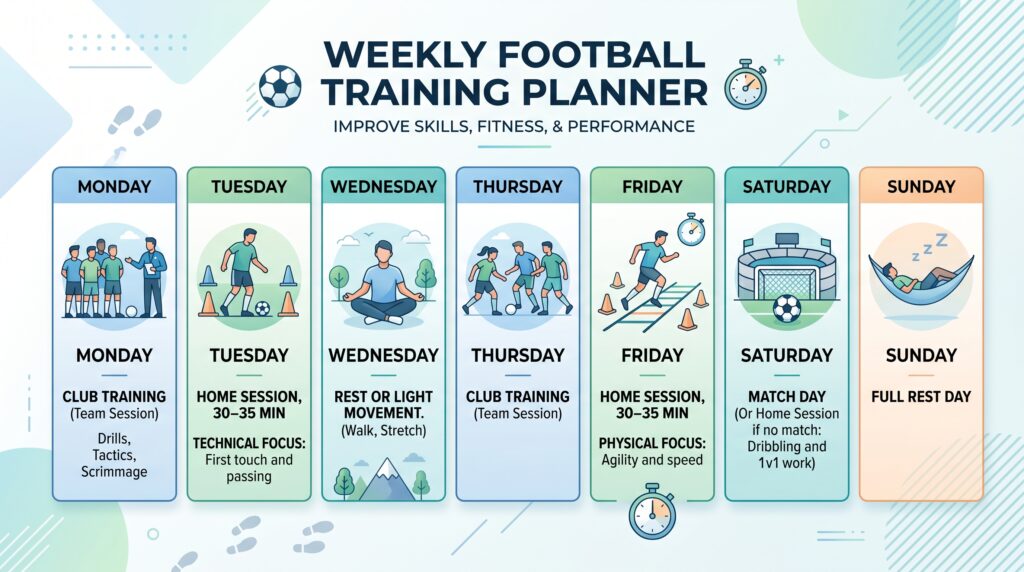
Four training days per week is the target. This fits around school, club sessions, and match days without creating fatigue. The structure below assumes two club sessions already exist in the week.
Sample Weekly Schedule
Monday: Club training (team session)
Tuesday: Home session, 30–35 min (technical focus: first touch and passing)
Wednesday: Rest or light movement (walk, stretch)
Thursday: Club training (team session)
Friday: Home session, 30–35 min (physical focus: agility and speed)
Saturday: Match day (or home session if no match: dribbling and 1v1 work)
Sunday: Full rest day
Home Football Training Sessions: What Each One Looks Like
Session 1: First Touch and Passing (Wall Work)
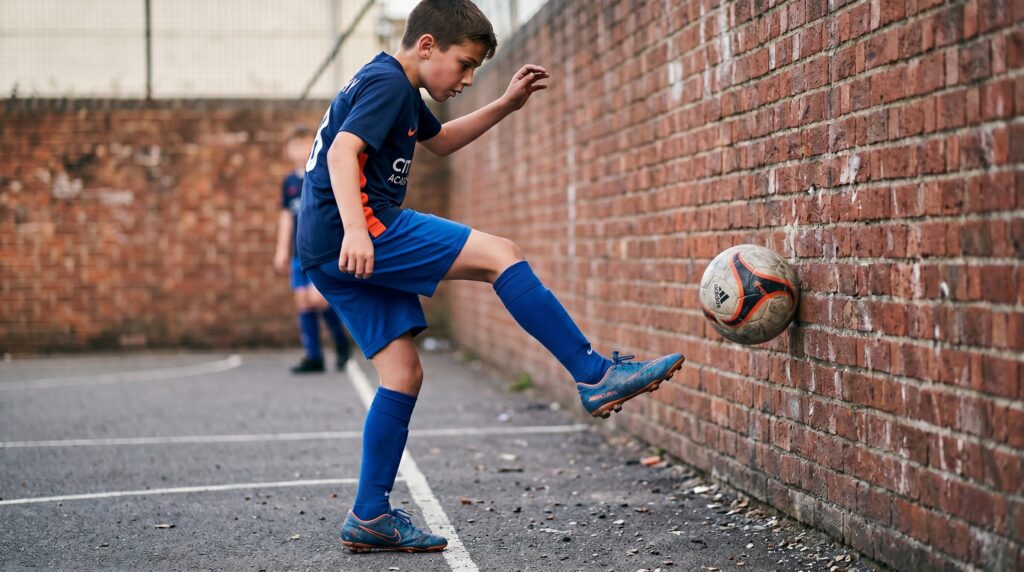
Duration: 30–35 minutes
- Warm-up (5 min): Jog on the spot, leg swings, ankle rotations, light toe-taps on the ball
- Wall passes with right foot only (7 min): 2-touch control, then pass, focus on cushioning the ball
- Wall passes with left foot only (7 min): Same drill, weaker foot
- Alternating feet (6 min): Right, left, right, left in sequence, keep the rhythm smooth
- First touch direction changes (5 min): Receive off the wall, take one touch to the side, pass back immediately
- Cool down (5 min): Static stretching, calves, quads, hip flexors
If you don’t have a wall, use a rebounder or practise ball juggling and ground passes against a garden fence.
Session 2: Agility, Speed, and Dribbling
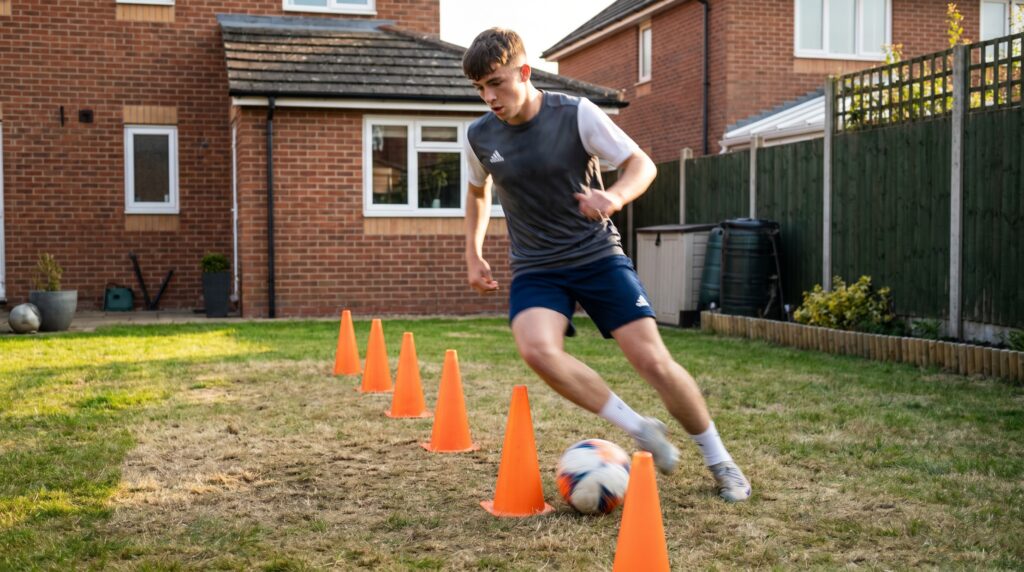
Duration: 30–35 minutes
- Warm-up (5 min): Dynamic stretches, high knees, lateral shuffles
- Cone dribbling circuit (8 min): Set 4–6 cones in a line, 1 metre apart. Weave through at 70% speed, then sprint back
- Speed burst drill (7 min): Place 2 cones 10 metres apart. Dribble to the far cone, stop the ball, and explode back without the ball. 8 reps with 30 seconds rest
- 1v0 skill moves (8 min): Pick 2 moves (e.g. Cruyff turn, step-over). Perform each one, approaching a cone, 20 reps each
- Cool down (5 min): Walk, breathing exercises, stretching
Technical Skills to Prioritise in Home Football Training
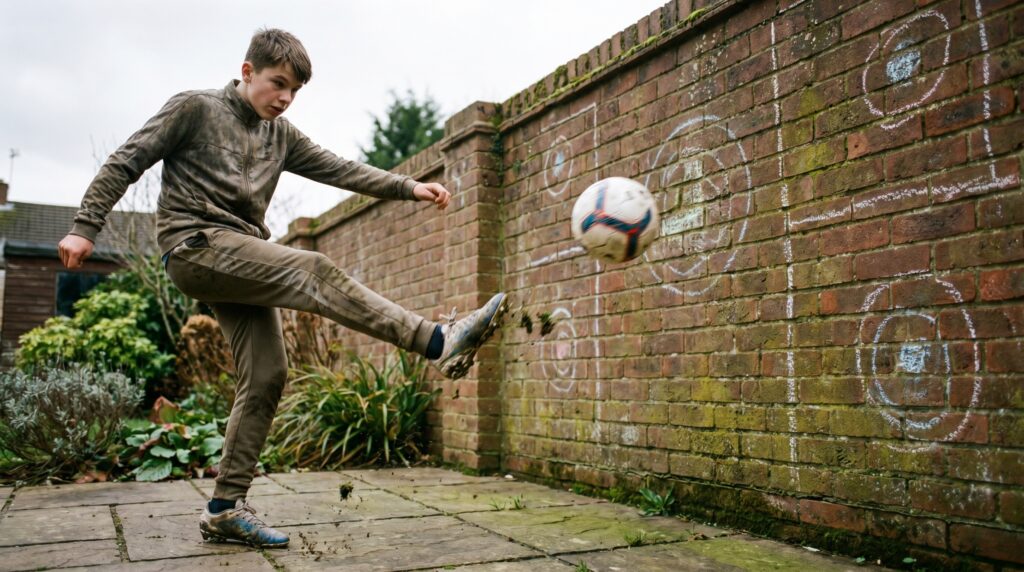
Not all skills need equal time spent on them during youth training. Focus on those skills that impact performance in every game.
- First touch is an Essential skill in football. A good first touch gives you time and space, but a bad first touch takes away time and space.
- Weak foot passing: Many young players neglect their weak foot. Train it at home secretly. Just ten minutes a day will make you better after six weeks.
- Ball control close to your body while running at speed: Control the ball closely as you run fast.
- Change of direction:Ability to change direction quickly without losing the ball, useful for escaping pressure.
- Shooting technique: If you have enough space, practise striking the ball with your laces and with the instep from 10–15 metres.
How to Track Progress and Stay Motivated
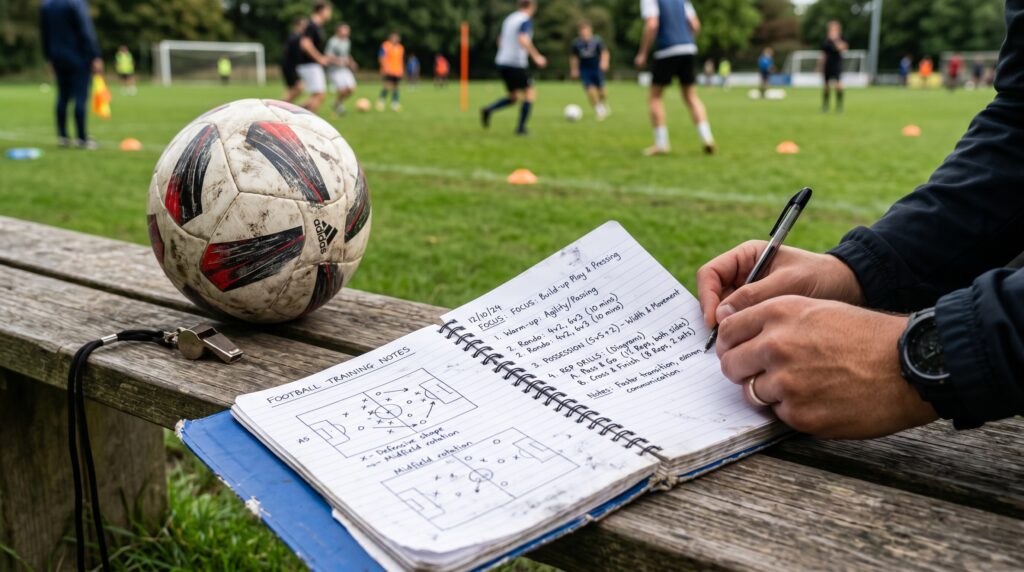
Not monitoring progress while training is an effective method of decreasing motivation. Proof that the effort made produces results is important.
You can use a notebook or a note-taking app on your smartphone. At the end of each workout session, write down the following three things: what was practised, how many repetitions were performed, and what part will be worked on next time. That’s enough.
Monthly Benchmarks for Youth Players
- Wall pass accuracy (weak foot): Target 80% clean control passes from 5 metres over 20 attempts by the end of month 1
- Cone weave speed: Record your time through a 6-cone course. Aim to reduce it by 0.3–0.5 seconds per month
- Juggling: Track your personal best. Going from 15 to 40 consecutive juggles in 4 weeks is realistic with daily practice
- Self-assessment in matches: Notice whether your first touch feels more controlled during actual games
The Mistakes That Slow Down Home Football Training
Only train your strong foot
For each exercise conducted using your right foot, do the same exercise using your left foot. At first, you may find that progress is slow; this feeling is a good sign.
Going through the motions
Twenty sloppy juggling attempts are worth less than five focused, controlled ones. Speed and volume mean nothing without quality intent.
Skipping rest days
Youth players aged 12–18 are still developing physically. Training every day without rest increases injury risk. The schedule above has built-in rest for a reason.
No clear focus per session
Randomly kicking a ball around for 30 minutes is not training. Pick one or two skills per session and work on them deliberately.
Frequently Asked Questions About Home Football Training
How many times a week should a teenage footballer train at home?
Three to four home sessions per week is the recommended amount for youth players already attending club training twice a week. That adds up to roughly 2 hours of extra football-specific practice per week without overloading the body.
Can you get noticeably better at football by training at home?
Yes. Consistent home practice directly improves first touch, weak foot ability, and close control. Most youth players have limited ball time at club sessions. Adding structured home drills fills that gap in a measurable way. Expect to see real improvement within 4–6 weeks of consistent work.
What football drills can I do at home with no equipment?
You can do ball juggling, toe-taps, sole rolls, wall passes, and most dribbling drills with just a football and a small space. Cones help but household items (water bottles, books) work as substitutes. A wall replaces a training partner for passing and first touch work.
How long should a home football training session be for youth players?
It is advisable to spend 30 to 45 minutes on each practice session. Shorter periods with a definite objective produce more desirable outcomes than lengthy periods without an objective. Practice sessions lasting longer than 45 minutes reduce concentration levels, especially among individuals aged between 12 and 16 years.
Is home football training enough to replace club sessions?
Home training is used as a complementary, not a replacement, tool. Sessions in a club provide tactical guidance and a teamwork environment that are impossible to simulate at home while exercising. Utilise home training to develop your techniques, which will then be employed in the team game.
Start Your Home Football Training Plan This Week
The gap between the current you and your future self as a football player decreases through repeated efforts. The club practice is vital, but it cannot get you everywhere. Your personal sessions will occur in the privacy of your own home, possibly in your yard, off the wall, on your own.
Begin your training with the two exercises mentioned earlier, repeating them for four weeks without any additions. Record all your repetitions and score results, then see where you stand after one month.
Short and regular training is always better than rare and lengthy exercise periods. Thirty minutes today means more than two hours weekly.
Pick up the ball. Set the cones. Start Today.