
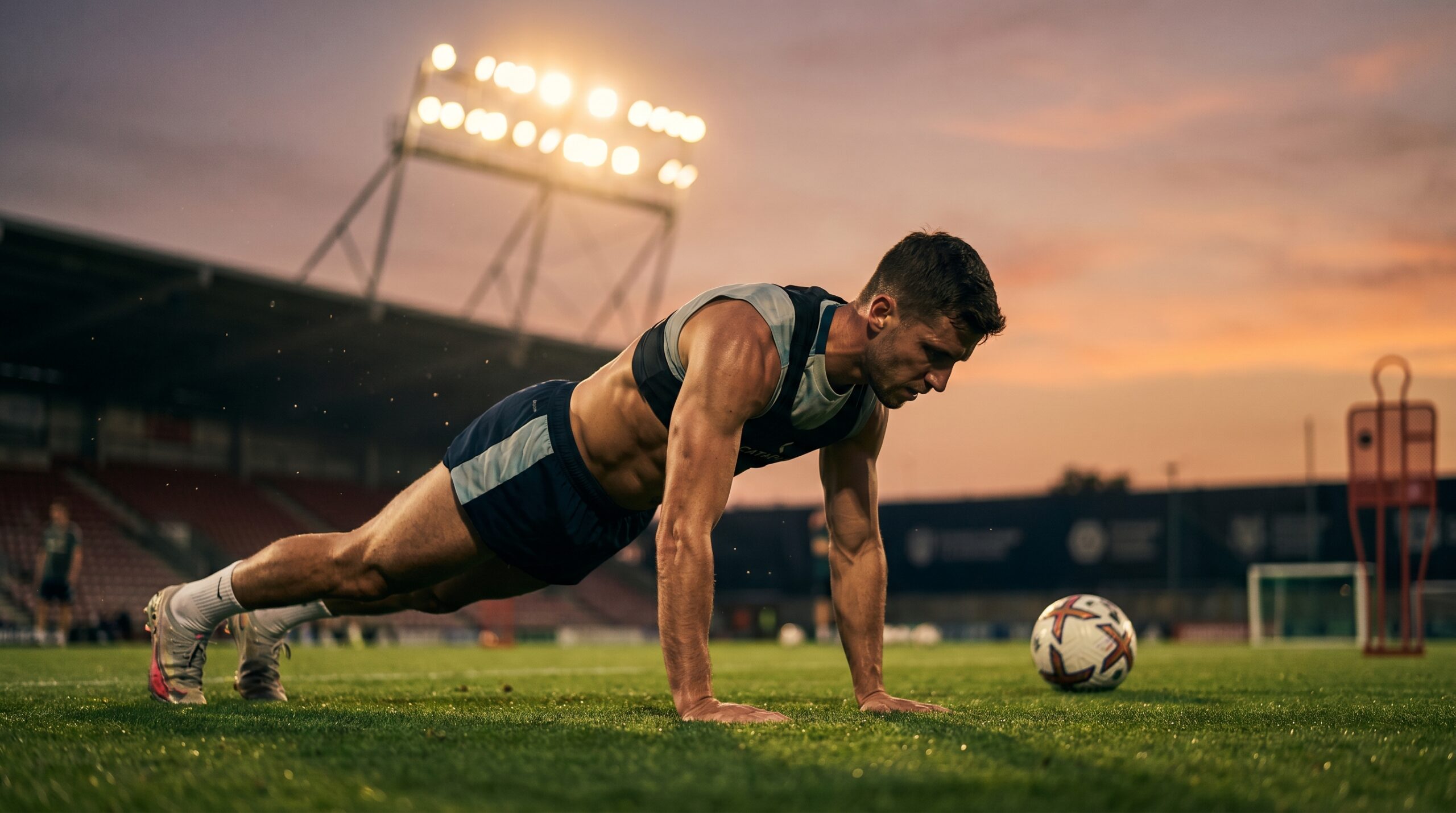
A strong core is the real foundation of every football movement. From sprinting and tackling to shooting and winning match, almost every action on the pitch starts from your midsection. When your core is strong, your balance improves, your power increases, and your body stays stable under pressure.
Still, many players waste time doing endless sit-ups that don’t translate into real match performance. They build fatigue, not functional strength.
In this guide, we break down the best core exercises for football players based on real sports science and practical training experience—not random gym trends. You’ll learn the most effective exercises, proper sets and reps, and a complete football core workout routine you can actually follow. We’ll also answer the most common questions players ask about core training and performance.
In This Article
- Why Core Strength Matters for Football
- The Best Core Exercises for Football Players
- A Complete Football Core Workout Routine
- Balance and Stability Exercises for Football
- Home Core Workout for Football Players
- Common Mistakes to Avoid
- Frequently Asked Questions
Why Core Strength Matters for Football
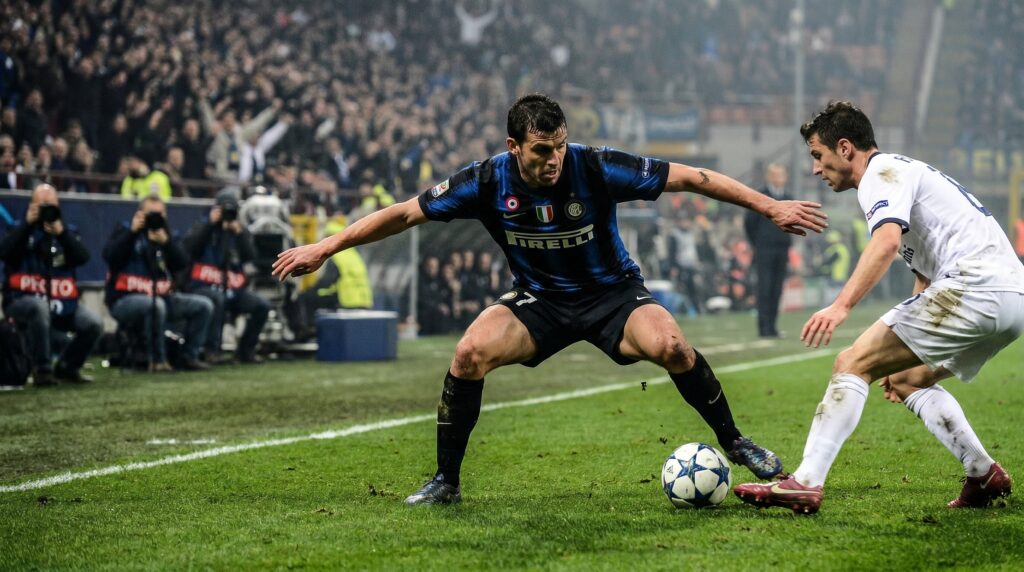
Your core is more than just abs. It has the deep stabilizers, like the transverse abdominis, your lower back, hips, glutes and obliques. These muscles govern your posture, transfer force from your upper to your lower body, and protect your spine in contact.
That frequently matters in football. “When Virgil van Dijk is winning an aerial duel, he is tightening his core to transfer ground force through his body into that header. As Mohamed Salah cuts inside, his obliques and hip stabilizers keep him upright through the change of direction. Weak core???? Lose power, lose balance, pick up injuries quicker. Weak core? You lose power and balance, and you pick up injuries faster.
Research Note
A 2018 study in the Journal of Strength and Conditioning Research found that footballers with stronger core stability produced significantly more force during kicking and showed better balance during single-leg movements. Core training is not optional for serious players.
Another reason why core strength exercises for soccer players are neglected is the indirect effects. You don’t feel core strength when you’re on a squat rack. You see it in the 87th minute when you can still win headers and can still stay on your feet under pressure.
The Best Core Exercises for Football Players
These seven exercises cover every demand football puts on your midsection: anti-extension, anti-rotation, lateral stability, and explosive power. They are the foundation of any solid football strength and conditioning programme.
1. Dead Bug
The dead bug is one of the most effective core exercises a footballer can do. Lie on your back, arms pointing to the ceiling, knees at 90 degrees. Slowly lower one arm and the opposite leg toward the floor without letting your lower back arch. Return and repeat on the other side. The keyword is slowly. This exercise trains your deep stabilisers to resist extension, exactly what happens when you plant a foot and strike a ball.
2. Plank Variations
A standard plank builds basic anti-extension strength. Once you can hold it for 60 seconds with no form breakdown, progress to more demanding versions. The RKC plank (squeeze everything, create maximum tension) is far harder than it looks. Side planks target your lateral chain, which is critical for resisting being pushed off the ball.
3. Pallof Press
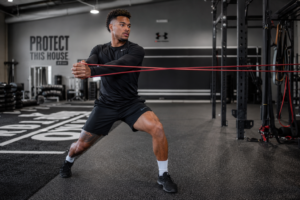
Attach a resistance band to a fixed point at chest height. Stand sideways to it, hold the band at your chest, then press it straight out in front of you and hold for 2 seconds before returning. Your core works to resist the rotational pull. This directly mirrors what happens when you shield a ball from a defender or hold your position in a challenge.
4. Copenhagen Plank
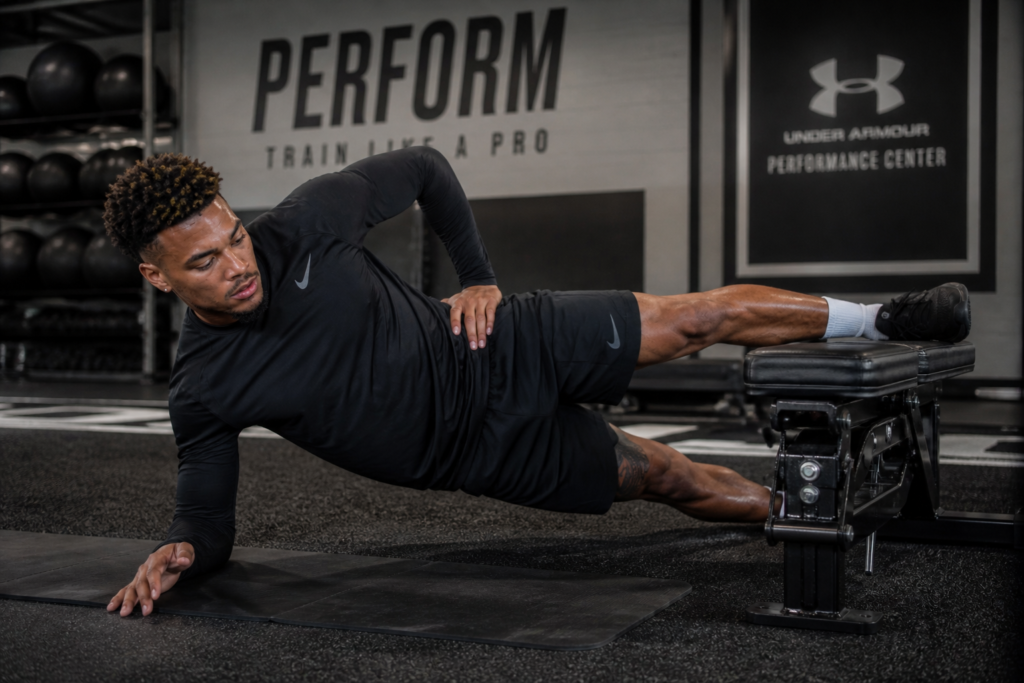
Place your top foot on a bench and your bottom foot under it. Hold a side plank using only the bench for support. This exercise targets the adductors (inner thighs) alongside the lateral core. Groin injuries are one of the most common in football, and the Copenhagen plank is one of the best exercises to reduce that risk. A 2019 study found it cut adductor injury rates by 41% in footballers who used it in their training.
5. Russian Twist
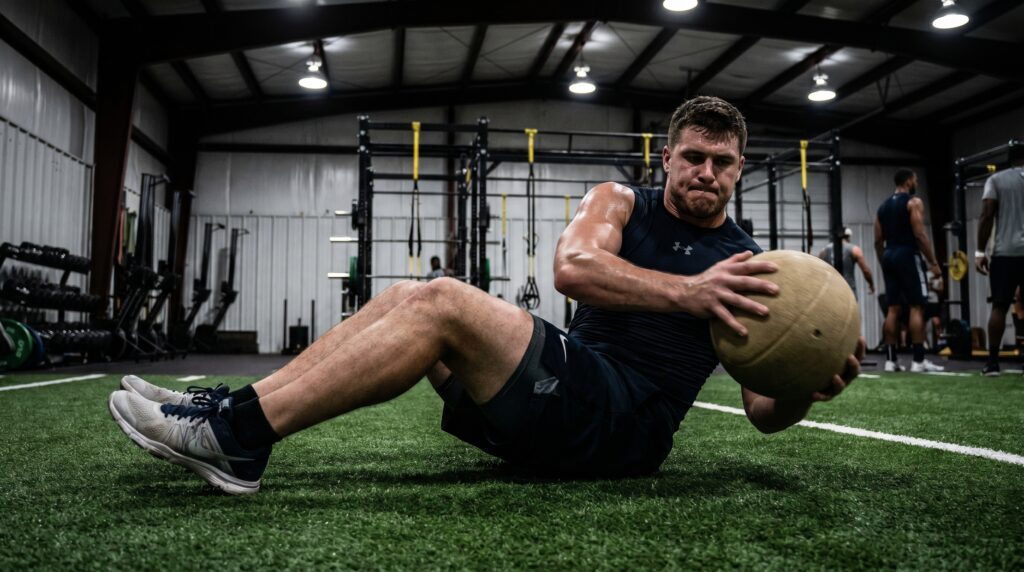
Sit at a 45-degree lean, feet slightly elevated. Hold a medicine ball and rotate from side to side, touching the ball to the floor each time. The rotation trains your obliques under load, which directly carries over to striking, throwing, and changing direction. Use a ball between 4 and 8 kg, depending on your strength level.
6. Hanging Leg Raise
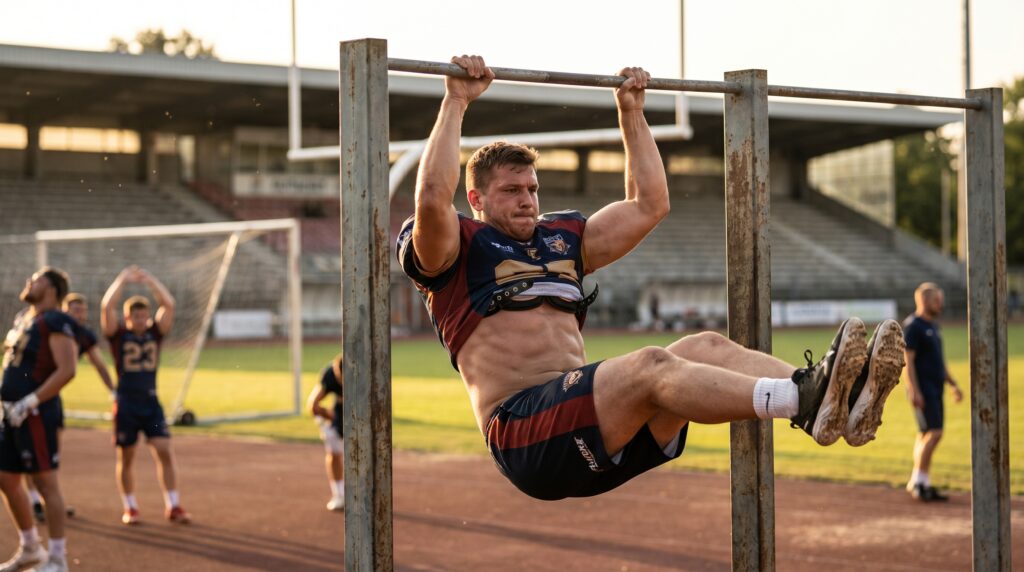
Hang from a pull-up bar and raise your legs until they are parallel to the floor. Control the descent. This builds serious hip flexor and lower abdominal strength. For football players specifically, strong hip flexors improve your kicking motion and sprint mechanics. Start with bent knees if straight-leg raises are too hard.
7. Anti-Rotation Hold (Single-Arm Farmer Carry)
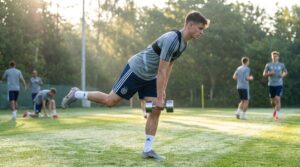
Pick up a heavy kettlebell or dumbbell in one hand and walk 20 to 30 metres in a straight line. Your core has to resist the lateral lean caused by the unilateral load. This trains the kind of stability you need when carrying the ball at speed or holding off a challenge with one arm extended.
| Exercise | Sets x Reps | Rest | What It Trains |
| Dead Bug | 3 x 8 each side | 45 sec | Deep stabilisers, anti-extension, lower back control |
| Copenhagen Plank | 3 x 25 sec each side | 45 sec | Lateral core and adductors. Cuts groin injury risk by 41% |
| Pallof Press | 3 x 10 each side | 45 sec | Anti-rotation strength. Ball shielding, body positioning |
| Russian Twist | 3 x 12 each side | 45 sec | Oblique and rotational power. Improves striking force |
| Hanging Leg Raise | 3 x 10-12 | 60 sec | Lower abs and hip flexors. Improves kicking mechanics |
| Side Plank | 3 x 35 sec each side | 30 sec | Lateral stability. Resisting pressure in 1v1 situations |
| Anti-Rotation Hold | 3 x 25 m walk | 60 sec | Full lateral chain, grip, and postural endurance |
A Complete Football Core Workout Routine
Use this as an add-on at the end of your regular training session, 3 times per week. The whole block takes 12 to 15 minutes. No excuses.
| Exercise | Sets | Reps / Duration |
Rest |
|
Dead Bug |
3 | 8 each side |
45 sec |
|
Copenhagen Plank |
3 | 25 sec each side |
45 sec |
|
Pallof Press |
3 | 10 each side | 45 sec |
| Russian Twist (loaded) | 3 | 12 each side |
45 sec |
| Hanging Leg Raise | 3 | 10 |
60 sec |
| Side Plank | 3 | 35 sec each side |
30 sec |
Run this as a circuit, 2 to 3 times per week. In match week, cut it to two sessions and reduce total sets by one to keep your legs fresh.
Balance and Stability Exercises for Football
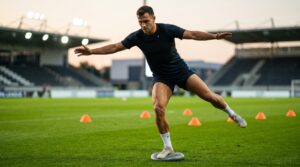
Balance and core strength are two sides of the same coin. You can have strong abs and still wobble when a defender leans into you, because balance is also a neuromuscular skill. These exercises train your body to stabilise quickly and automatically.
Single-Leg Romanian Deadlift
Stand on one leg, hold a light dumbbell, and hinge at the hip until your back is parallel to the floor. Return slowly. This trains the hamstrings, glutes, and stabilisers simultaneously. It also mirrors the moment just before you plant and kick, when you’re balanced on one leg at high speed.
Bulgarian Split Squat
Back foot elevated on a bench, front foot forward. Lower until your front thigh is parallel to the floor, this builds single-leg strength and forces your stabilisers to work overtime. Footballers who use this exercise regularly report fewer ankle and knee problems over a full season.
Reactive Balance Drills
Stand on one leg and have a partner toss a ball at random angles for you to catch and return. The unpredictability forces your nervous system to respond fast. You can replicate this alone by standing on one leg and tossing a ball against a wall at different spots. 3 sets of 30 seconds is enough.
Home Core Workout for Football Players
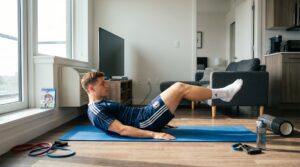
No gym access is not an excuse to skip core work. Most of the best core exercises for football players need nothing but floor space and 15 minutes.
Here is a zero-equipment home core workout you can do anywhere:
- Hollow Body Hold– 3 sets x 30 seconds. Lie on your back, press your lower back into the floor, and lift your arms and legs a few inches off the ground. Hold without letting your back arch.
- Dead Bug– 3 sets x 8 each side. Described in full above.
- Side Plank– 3 sets x 35 seconds each side.
- Mountain Climbers– 3 sets x 20 seconds. Drive each knee to your chest fast while keeping your hips flat. This adds a cardiovascular demand to mimic match conditions.
- Glute Bridge– 3 sets x 15 reps. Drive your hips to the ceiling, pause at the top, and lower slowly. Progress to single-leg when this becomes easy.
Tip for Home Training
Do this circuit 3 to 4 times per week, ideally on the same days you train for football. Keep rest periods short (30 to 40 seconds) to maintain intensity. Add a resistance band around your knees during the glute bridge to increase difficulty without any extra equipment.
Common Mistakes Footballers Make With Core Training
Relying on sit-ups and crunches. These exercises train spinal flexion, which is a relatively small part of what football demands. Your core needs to resist movement, not just create it. Shift to anti-extension and anti-rotation exercises.
Core isolation training. Core exercises are most important when your whole body is involved. Squats, deadlifts and lunges all require your core to fire up. If you’re missing compound lifts, you’re missing a lot of core stimulus.
Rushing through reps. Speed kills the purpose of most core exercises. A dead bug done in 2 seconds teaches you nothing. The same movement done in 4 to 5 seconds creates real muscular demand. Slow down.
Skipping unilateral work. Football is a one-sided sport. You plant on one leg, kick with the other. Copenhagen planks, single-leg RDLs, and single-arm carries train the asymmetries that matter on the pitch.
No progressive overload. Core training follows the same principles as any other training. If a plank is easy after 3 weeks, make it harder. Add weight, reduce the base of support, or increase time under tension. Progress or plateau.
Frequently Asked Questions
What are the best core exercises for football players?
The best core exercises for football players are dead bugs, Copenhagen planks, pallof press, Russian twists, hanging leg raises, side planks, and anti-rotation holds. These cover all the movement demands of football: anti-extension, anti-rotation, lateral stability, and rotational power.
How often should a footballer train their core?
Most strength and conditioning coaches recommend 3 to 4 core sessions per week. You don’t need a separate session. A 12 to 15-minute block tagged onto the end of your regular session is enough. During heavy match weeks, drop to 2 sessions and reduce volume by roughly 30%.
Can I do a football core workout at home?
Yes. Dead bugs, hollow holds, side planks, mountain climbers, and glute bridges all require nothing but floor space. A resistance band adds variety but is not essential. The home workout listed in this article covers every muscle group a footballer needs to train.
Will core training make me a better footballer?
Stronger core = more power in your shots, better balance in challenges, faster changes of direction, and fewer injuries. The effects show up over weeks, not days. Research consistently links core stability to improved athletic performance in team sports, including football.
How long before I see results from core training?
Most players notice improved stability and posture within 4 to 6 weeks of consistent training. Performance improvements on the pitch, like better aerial ability and sharper direction changes, typically show up between 6 and 12 weeks. Stick with it.
Conclusion
The best core exercises for football players are not about getting visible abs. They’re about building a body that holds up under 90 minutes of physical demand, produces explosive force when you need it, and keeps you on the pitch for a full season without breaking down.
Start with the seven exercises in this guide. Use the routine three times per week. If you train at home, the bodyweight circuit works just as well. Progress by adding load or reducing stability, not by adding more volume. Your core will catch up fast, and so will your game.
